Simple System to Keep Your Home Clean Daily is not about doing more cleaning.
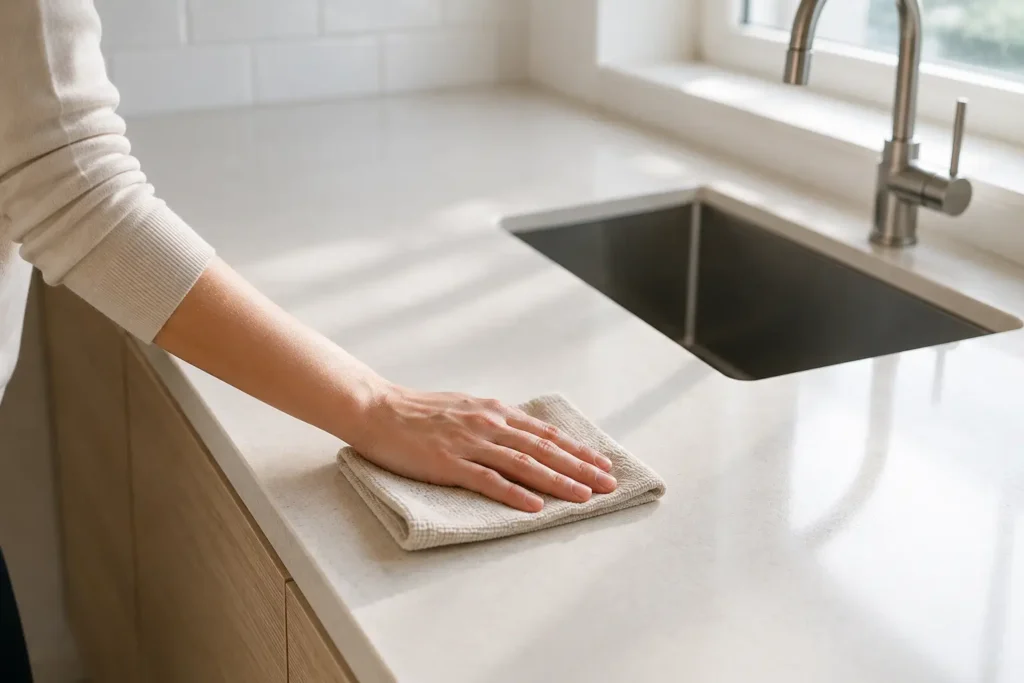
It’s about doing the right things, at the right time, in a way that is easy to repeat.
This difficulty is often the same pattern described in why housework feels so hard, where effort alone doesn’t create lasting results.
Many people struggle to keep their homes clean not because they don’t try, but because the approach they use is too complex, too demanding, or disconnected from daily life.
A simple system changes that.
This approach connects directly with practical routines that help you keep your home clean daily, where consistency is built through small daily actions rather than large cleaning efforts.
Instead of relying on motivation or large cleaning sessions, it creates small, repeatable actions that maintain order naturally.
Simple System to Keep Your Home Clean Daily (and Why It Works)
A simple system is a structure that reduces effort instead of increasing it.
It doesn’t depend on perfect routines or long task lists.
Instead, it focuses on small daily actions, low effort tasks, and consistent repetition, making it easier to maintain a clean home without feeling overwhelmed in daily life.
This works because it aligns with real life.
You don’t need to find extra time.
You don’t need to follow strict schedules.
And you don’t need to reset your entire home.
You just maintain it.
The Simple System to Keep Your Home Clean Daily (Step-by-Step)
This system is designed to be flexible, fast, and easy to follow.
It is divided into three natural moments of the day.
Morning Reset (5–10 Minutes)
The goal of the morning reset is not to clean.
It is to start the day with a stable environment.
Focus on:
- making the bed
- clearing visible surfaces
- putting away items left from the night before
These small actions prevent clutter from building up early in the day.
Midday Maintenance (5 Minutes)
This step keeps the system from breaking.
It is a quick correction, not a full reset.
Focus on:
- returning items to their place
- clearing small messes
- resetting one active area (kitchen, desk, or living space)
This prevents accumulation.
Evening Reset (10–15 Minutes)
This is the most important step.
It prepares the home for the next day.
Focus on:
- clearing surfaces
- organizing key areas
- preparing spaces for morning use
The goal is not perfection.
It is continuity.
Where to Apply This System in Your Home
You don’t need to apply this system everywhere at once.
Start with high-impact areas.
Kitchen
- clear counters after use
- reset sink area
- organize frequently used items
The kitchen is the center of daily activity.
Keeping it stable reduces overall mess.
Living Room
- remove out-of-place items
- reset surfaces
- keep seating areas clear
This space sets the visual tone of the home.
Bedroom
- make the bed
- keep surfaces minimal
- avoid accumulation of clothing
A simple bedroom reset improves consistency.
Bathroom
- quick wipe of surfaces
- return items after use
- maintain essential order
Small actions prevent buildup.
How to Keep This System Consistent
The system only works if it is easy to maintain.
Consistency is built through simplicity.
Keep Tasks Small
Large tasks create resistance.
Small tasks are easier to repeat.
Avoid Overloading the System
Adding too many steps makes the system harder to follow.
Keep it minimal.
Allow Flexibility
You don’t need to follow the system perfectly.
Skipping a step does not break it.
Focus on Continuity, Not Perfection
The goal is not to have a perfect home.
It is to avoid starting over.
Adjust Based on Your Routine
Every home is different.
Adapt the system to fit your daily life.
Common Mistakes That Make Daily Cleaning Systems Fail
Even simple systems can fail if they are not applied correctly.
Trying to Do Too Much
Adding extra tasks quickly turns a simple system into a complex one, which is exactly why cleaning systems don’t work when they become too demanding.
Expecting Immediate Results
The system works over time.
Consistency matters more than instant change.
Ignoring Maintenance
Skipping small steps leads to buildup.
Making the System Too Rigid
A system that cannot adapt will eventually break.
The Difference Between Cleaning More and Maintaining Better
Cleaning more:
- requires time
- depends on energy
- leads to cycles of mess and reset
Maintaining better:
- requires less effort
- fits into daily life
- keeps the home stable
This is what makes a simple system effective.
Conclusion
A Simple System to Keep Your Home Clean Daily works because it simplifies the process instead of complicating it.
It removes unnecessary steps.
It reduces effort.
And it focuses on consistency instead of perfection.
You don’t need more time.
You don’t need more motivation.
You just need a system that works with your life, not against it.
This is also the reason behind approaches like why simple systems work better at home, where reducing effort and simplifying structure leads to more consistent results.
And the simpler the system is, the more likely it is to last.