Why Simple Systems Work Better at Home is something many people only realize after trying more complex approaches that don’t last.
At first, detailed systems can feel effective. They create structure, define tasks, and give a sense of control. But over time, they often become harder to follow. Steps are skipped, routines break, and the system slowly fades.
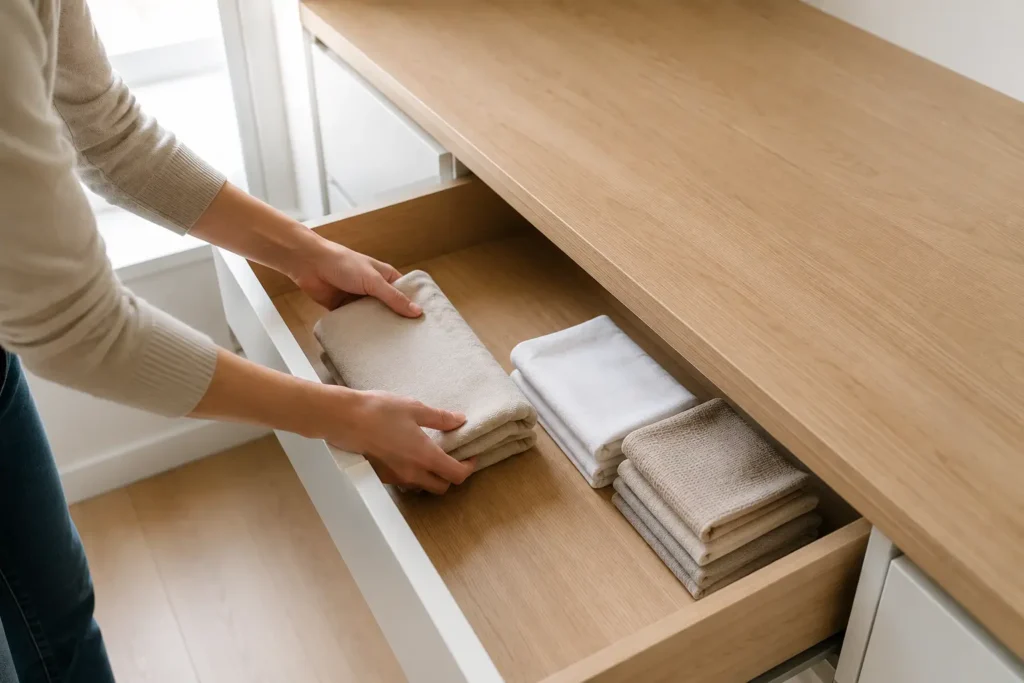
Simple systems, on the other hand, tend to hold.
Not because they do more.
But because they demand less.
This is the same pattern explained in why organization methods fail over time, where systems gradually break down when they are too complex to maintain.
Why Simple Systems Work Better at Home in Real Life
Simple systems work better because they match how daily life actually happens.
Because of this, they continue working even when life is not perfectly organized, which contrasts with what happens in why cleaning systems don’t work.
Most homes are not predictable environments. Routines change, time is limited, and energy fluctuates throughout the day. Systems that require precision and consistency struggle to adapt to these conditions.
Simple systems are different.
They:
- require fewer decisions
- involve fewer steps
- adapt more easily to change
Because of this, they continue working even when life is not perfectly organized.
This is the main reason why simple systems work better at home—they are built for real conditions, not ideal ones.
The Hidden Reasons Simplicity Makes Systems More Effective
The effectiveness of simple systems is not just about ease. It’s about how they reduce friction in daily life.
Fewer Decisions Reduce Mental Load
Every household task involves decisions.
Where does this go? Should this be done now or later? What comes next?
Complex systems increase the number of decisions required. Simple systems reduce them.
When fewer decisions are needed, tasks become easier to start and complete.
Lower Effort Increases Consistency
A system that requires high effort is difficult to maintain.
Even if it works initially, it becomes harder to follow over time, which is often why people feel stuck in the cycle described in why I can’t keep up with housework.
Simple systems reduce the effort required for each task.
This makes it more likely that the system will be used consistently.
Flexibility Prevents Breakdown
Simple systems are naturally more flexible.
They don’t depend on strict sequences or perfect timing. If something is skipped, the system still holds.
This flexibility prevents small disruptions from turning into complete breakdowns.
Simplicity Supports Habit Formation
Habits are easier to build when actions are simple.
A system that fits into daily routines without friction is more likely to become automatic over time.
This is one of the main reasons simple systems are sustainable.
Less Structure, Better Adaptation
It may seem counterintuitive, but less structure often leads to better results.
Rigid systems can break under pressure.
Simple systems adapt.
They allow variation without losing effectiveness.
What Makes a Simple System Actually Work
Not all simple systems are effective. For a system to work, simplicity needs to be intentional, which is the core idea behind minimal effort home organization.
For a system to work, simplicity needs to be intentional.
Clear and Limited Actions
A good system focuses on a small number of actions.
Instead of trying to manage everything, it prioritizes what matters most.
This keeps the system manageable.
Easy to Start, Easy to Repeat
A system should not require preparation.
The easier it is to start, the more likely it is to be used.
Repetition builds consistency.
Designed Around Daily Flow
Simple systems fit into existing routines.
They don’t require major changes.
Instead, they align with what is already happening in the home.
Tolerant to Imperfection
A system that requires perfection will fail.
A simple system allows variation.
It continues working even when steps are missed.
Focus on Maintenance, Not Reset
Simple systems support ongoing maintenance.
They avoid large resets and instead rely on small, consistent actions.
This prevents buildup and reduces effort.
Practical Ways to Build Simple Systems at Home
You don’t need to redesign everything to create a simple system.
These small adjustments become easier to sustain when supported by habits to keep house clean without daily cleaning effort.
Small adjustments can make a big difference.
Remove Unnecessary Steps
Look at your current routines.
Ask:
- Is this step necessary?
- Can this be simplified?
Reducing steps makes systems easier to follow.
Limit the Number of Decisions
Define simple rules.
For example:
- where items go
- when tasks are done
This reduces mental effort.
Keep Tasks Short
Short tasks are easier to complete.
Even a few minutes can maintain order.
Consistency matters more than duration.
Align Systems With Real Behavior
Observe how your home is actually used.
Adjust systems to match that behavior.
This makes them more effective.
Make Systems Easy to Restart
No system will be followed perfectly.
What matters is how easy it is to return to it.
Simple systems make restarting easy.
Simple Ways to Keep Systems Consistent Over Time
Consistency is what makes systems effective.
Simple systems support this naturally.
Accept Imperfection
You don’t need to do everything.
Partial progress still matters.
Focus on Continuity
Instead of starting over, continue where you left off.
This reduces pressure.
Adjust as Needed
Systems should evolve.
Small changes keep them aligned with your routine.
Avoid Over-Optimization
Trying to improve systems too much can make them complex.
Keep them simple.
Stay Close to Daily Life
The more a system reflects your real routine, the more sustainable it is.
The Difference Between Complex Systems and Simple Systems
Complex systems:
- require precision
- depend on consistency
- break easily
- increase effort
Simple systems:
- reduce decisions
- adapt to change
- support consistency
- remain stable over time
The difference is not in how much they do.
It’s in how well they fit into daily life.
Conclusion
If you’ve been wondering why simple systems work better at home, the answer lies in how they reduce friction and adapt to real life.
They don’t depend on perfect routines.
They don’t require high effort.
And they don’t break when something changes.
Simple systems work because they are easy to follow, easy to repeat, and easy to maintain.
Not because they are perfect.
This becomes practical when applied through a simple system to keep your home clean daily, where simplicity turns into consistent action.
But because they are sustainable.