A simple home cleaning routine can make it much easier to keep your home clean without constant effort. Keeping your home clean every day often feels harder than it should, especially when small messes keep coming back.
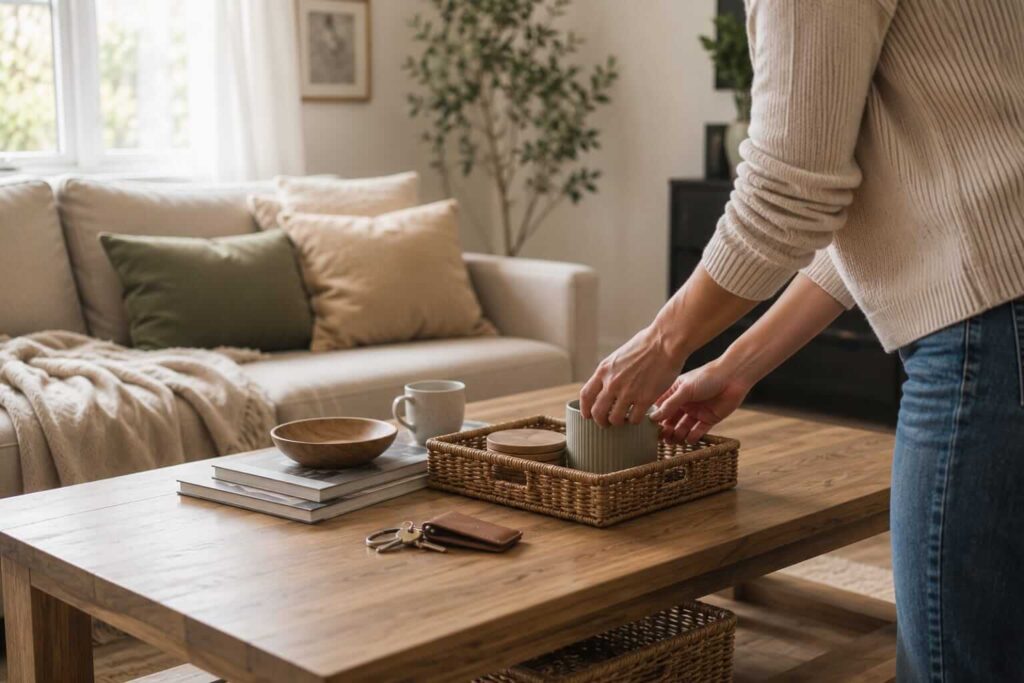
This usually happens not because of lack of effort, but because there is no simple structure supporting daily activity. Without a system that manages how the home is used throughout the day, even well-organized spaces gradually become messy again.
A simple daily system changes this dynamic. Instead of reacting to mess, it creates a steady flow of small actions that keep the home stable over time.
Why Daily Cleaning Often Doesn’t Last
Cleaning alone does not create lasting order.
In many homes, cleaning works as a temporary reset. The space looks organized for a while, but the same patterns that created the mess are still active.
What continues to happen daily:
Items are used and not returned immediately
Small tasks are postponed
Temporary placements become permanent
Without a structure to manage these behaviors, the home gradually returns to disorder.
This is the same pattern explained in why cleaning doesn’t seem to last, where effort alone is not enough to maintain results.
The Shift from Cleaning to System
A clean home is not maintained by effort alone. It is maintained by structure.
A daily system works by:
Guiding behavior instead of relying on motivation
Defining when small actions happen
Preventing accumulation before it starts
Over time, this reduces decision-making and turns maintenance into something automatic and easier to sustain.
The Simple Daily System
An effective daily system does not need to be complex. It only needs to be consistent. A practical way to apply this consistency is by following an ultimate home cleaning checklist that organizes essential tasks into simple, repeatable steps.
It can be reduced to three core actions:
Return Items Immediately
Items should return to their place after use whenever possible.
This helps prevent:
Surface buildup
Misplaced objects
Visual clutter
Even small delays in returning items can quickly lead to accumulation.
Use Short Reset Moments
Instead of relying on long cleaning sessions, use short resets throughout the day.
Examples include:
Resetting a room after use
Clearing surfaces before leaving a space
Restoring key areas at the end of the day
These small actions prevent minor messes from becoming larger problems.
Limit Temporary Storage
Many homes rely on temporary placement areas such as:
Chairs
Countertops
Corners
These areas often become permanent clutter zones.
A daily system reduces this by encouraging immediate decisions instead of postponement, which is one of the main reasons clutter keeps returning.
Why This System Works
This approach works because it aligns with how daily life actually happens.
Instead of trying to control every action, it organizes natural behavior.
Over time, it helps:
Reduce the need for large cleaning sessions
Prevent the buildup of small repeated disruptions
Lower mental load and decision fatigue
Without structure, small breakdowns accumulate. This leads to the same frustration described in why a house feels messy even when you try to keep it organized.
How This Affects the Entire Home
When applied consistently, a simple daily system creates stability across all spaces.
You may start to notice:
Rooms staying organized for longer
Fewer overwhelming cleaning sessions
A more predictable daily routine
The home becomes easier to manage because maintenance is distributed throughout the day.
Connection with Long-Term Maintenance
A daily system is only one part of a stable home structure. A more complete approach can be seen in a complete home cleaning system that connects daily habits, weekly adjustments, and long-term maintenance into a consistent framework.
It works best when combined with:
Weekly adjustments
Periodic maintenance
Simple organization rules
Without this broader structure, consistency becomes difficult to maintain. This is why many people feel like their house never stays clean despite regular effort.
Common Mistakes to Avoid
Even simple systems can fail if a few patterns are not addressed.
Avoid:
Trying to do everything at once
Relying on motivation instead of routine
Creating systems that are too complex
Ignoring small daily behaviors
The goal is not perfection, but consistency.
Conclusion
Keeping your home clean daily does not require constant effort. It requires a structure that supports everyday life.
Instead of repeatedly starting over, a simple system allows small actions to maintain order continuously. When these actions become part of your routine, the home remains stable without the need for frequent cleaning.
Over time, this creates a space that feels organized, manageable, and easier to maintain.