Keeping a home clean is often seen as something that requires time, energy, and constant effort. Many people rely on occasional deep cleaning sessions or bursts of motivation, only to find that the results don’t last.
The problem is not the lack of effort.
It’s the lack of structure.
Without a clear system, small tasks accumulate faster than they are completed. Surfaces begin to collect items, routines become inconsistent, and cleaning turns into a reactive cycle.
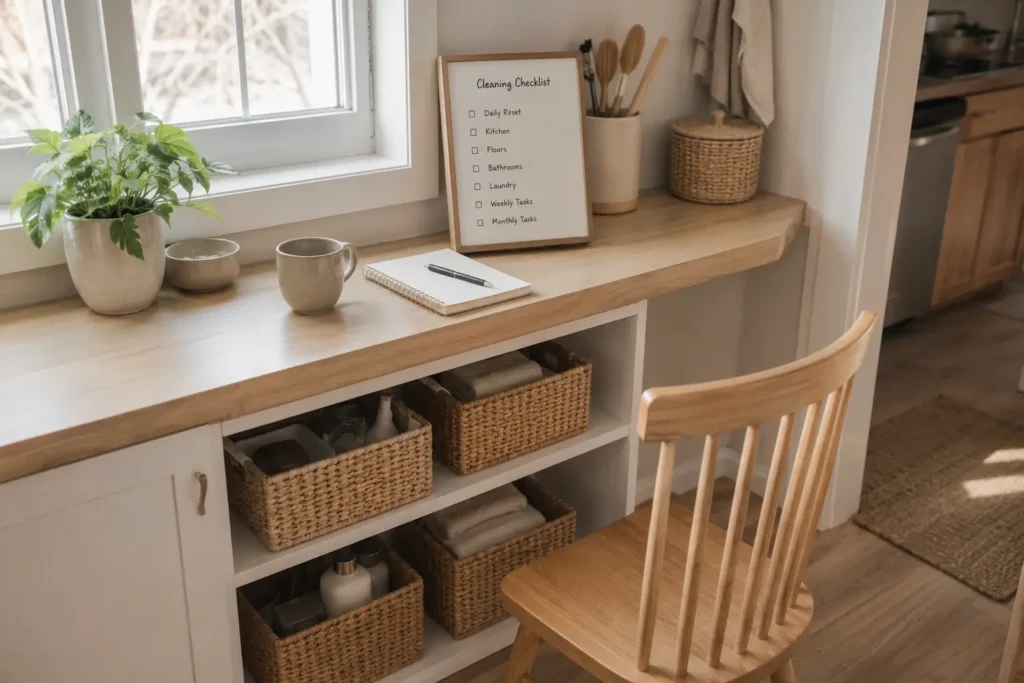
The ultimate home cleaning checklist solves this by providing a structured, repeatable system that keeps your home clean through simple, consistent actions.
Instead of trying to manage everything at once, you follow a clear set of tasks organized by frequency and priority.
Over time, this creates stability, reduces effort, and makes maintaining a clean home feel natural.
Why an Ultimate Home Cleaning Checklist Works
A checklist works because it removes uncertainty.
This approach becomes even more effective when supported by a structured system that organizes how cleaning is done over time. A clear example of this can be seen in a complete home cleaning system, where daily habits, reset routines, and long-term maintenance work together.
Instead of deciding what needs to be done every day, the system already defines it for you.
This reduces:
- decision fatigue
- mental load
- inconsistent routines
It also creates consistency.
When tasks are repeated at the right intervals, they prevent buildup before it becomes visible.
Without a checklist, cleaning is often reactive:
- wait until things feel messy
- spend more time correcting
- repeat the cycle
With a structured checklist, cleaning becomes preventive.
You maintain order instead of restoring it.
When to Use the Ultimate Home Cleaning Checklist
This checklist is designed to be used continuously, not occasionally.
It works best when integrated into your routine across different timeframes:
- daily maintenance
- weekly resets
- monthly adjustments
Each layer serves a different purpose.
Daily tasks prevent accumulation.
Weekly tasks restore balance.
Monthly tasks maintain long-term structure.
Together, they create a complete system that keeps your home clean without requiring constant effort.
The Ultimate Home Cleaning Checklist
This checklist is organized into three levels to match how cleaning naturally works in daily life.
1. Daily Cleaning Tasks (Prevention Layer)
These tasks prevent clutter and mess from building up throughout the day.
They are simple, quick, and highly effective.
- Clear kitchen counters after use
- Wash or load dishes
- Wipe frequently used surfaces
- Return items to their place
- Reset living room surfaces
- Manage small clutter areas
- Do a quick end-of-day reset
- Keep entryway organized
- Process small laundry items
These actions take minimal time but prevent the need for larger cleaning sessions later.
They become easier to maintain when they are part of a consistent routine, such as a simple system to keep your home clean daily that helps keep key areas under control every day.
2. Weekly Cleaning Tasks (Stabilization Layer)
Weekly tasks restore balance and address areas that daily routines cannot fully maintain.
- Clean bathroom surfaces and fixtures
- Change bed linens
- Vacuum or sweep floors
- Clean kitchen appliances (external surfaces)
- Wipe cabinet handles and switches
- Sort mail and paper clutter
- Reset high-traffic areas
- Empty trash bins completely
- Organize clutter-prone zones
These tasks ensure that small issues do not accumulate into larger problems.
3. Monthly Cleaning Tasks (Maintenance Layer)
Monthly tasks maintain deeper structure and prevent long-term buildup.
- Deep clean kitchen areas
- Clean inside appliances
- Declutter storage spaces
- Check and organize closets
- Clean baseboards and hidden areas
- Review unused items
- Reset storage systems
- Inspect overlooked areas
These actions keep the system functioning over time.
Without them, even well-maintained homes gradually lose organization.
Areas of the Home That Benefit Most From This Checklist
While the checklist applies to the entire home, certain areas have a greater impact on overall organization.
Kitchen
The kitchen is used constantly, making it one of the fastest areas to accumulate mess.
Daily resets and weekly maintenance keep it functional.
Living Room
Shared spaces collect a wide variety of items.
Simple resets maintain visual order and reduce clutter.
Entryway
This area controls how clutter enters the home.
Keeping it organized prevents disorder from spreading.
Bedroom
Clothing and personal items can quickly accumulate.
Regular resets maintain balance.
Bathroom
Moisture and frequent use require consistent maintenance.
Small weekly tasks prevent buildup.
How to Keep the System Consistent
A checklist is only effective when it is used consistently.
The goal is not perfection, but repetition.
Keep Tasks Short
Most tasks should take only a few minutes.
Short actions are easier to maintain daily.
Follow a Fixed Rhythm
Assign tasks to specific days or moments.
This removes decision-making.
Avoid Overloading One Day
Distribute tasks across the week.
This prevents fatigue and inconsistency.
Focus on High-Impact Areas
Not every task needs attention every day.
Prioritize areas that affect your routine the most.
These priorities are reinforced by simple behaviors practiced consistently, as shown in daily habits that keep your home organized, which support long-term stability.
Adjust When Necessary
If something feels difficult to maintain, simplify it.
A system should adapt to your life.
Combining Daily, Weekly, and Monthly Cleaning Systems
The real strength of the ultimate home cleaning checklist comes from combining all three layers.
Daily tasks prevent buildup.
Weekly tasks restore balance.
Monthly tasks maintain structure.
When used together:
- cleaning becomes predictable
- effort is reduced
- systems remain stable
- the home stays consistently organized
Instead of reacting to clutter, you maintain a steady state of order.
Conclusion
Keeping a home clean does not require constant effort or perfect routines.
It requires structure.
The ultimate home cleaning checklist provides that structure by organizing tasks into simple, repeatable actions that fit naturally into daily life.
By following a system instead of relying on motivation, you prevent clutter, reduce effort, and create a home that stays clean over time.
And once the system is in place, maintaining your home becomes something that happens automatically — not something you constantly need to fix.