Clutter rarely appears suddenly. In most homes, it builds up slowly through small daily actions that go unnoticed. A bag left on the table, papers placed on the kitchen counter, clothes dropped on a chair — each one seems insignificant at the moment. Over time, however, these small habits accumulate and create an environment that feels disorganized and overwhelming.
This gradual accumulation is closely related to what many people experience when their homes start to feel out of control, often leading them to wonder why their house gets messy so fast, where small daily behaviors quietly create disorder over time.
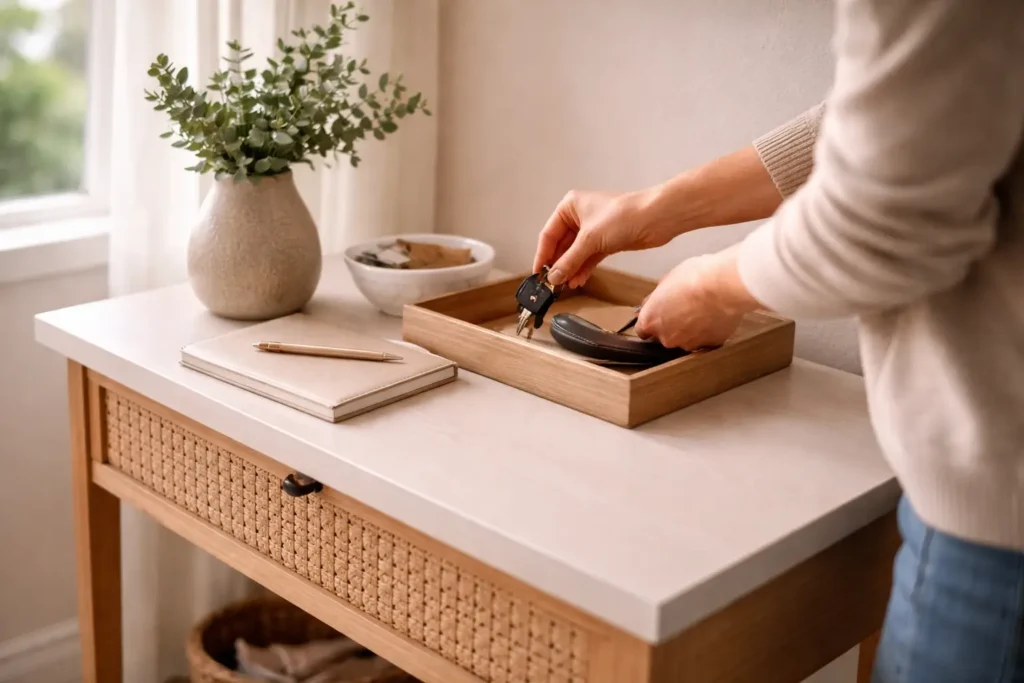
This is why daily habits that prevent clutter are so powerful. Instead of relying on occasional deep cleaning or large decluttering sessions, simple daily behaviors can keep your home consistently organized. When these habits become part of your routine, clutter has far fewer opportunities to build up.
The goal is not perfection. A home does not need to look spotless at all times to feel functional and comfortable. What matters is having small, repeatable habits that maintain order naturally.
Why Prevent Clutter Daily Habits Help Maintain Household Order
Many people assume that organization is mainly about storage systems or cleaning routines. While those elements are important, the real driver of household order is behavior.
Daily habits influence how objects move through a home. Every item has a small lifecycle: it is used, placed somewhere, and eventually moved again. When that movement happens randomly, clutter forms. When it follows consistent habits, the home stays organized with far less effort. Many homes experience the same cycle: clutter is removed during a big cleaning session, but slowly returns over time. Understanding why this happens can help prevent it from repeating. If you want to explore this pattern further, this article explains why clutter keeps coming back and what systems help break the cycle.
Prevent clutter daily habits work because they address clutter before it accumulates. Instead of reacting to mess after it becomes overwhelming, these habits quietly maintain balance.
There are three reasons why daily habits are effective:
They reduce decision fatigue.
When habits are automatic, you do not need to constantly decide where things should go.
They prevent accumulation.
Small actions repeated daily stop clutter from reaching critical levels.
They create predictable systems.
When objects follow the same pattern every day, maintaining order becomes easier.
For most households, the difference between a constantly messy home and an organized one is not cleaning frequency — it is habit consistency.
Prevent Clutter Daily Habits That Keep a Home Organized
The following habits are simple but powerful. Each one addresses a common way clutter forms in everyday life.
1. Return Items to Their Home Immediately
One of the simplest prevent clutter daily habits is returning items to their designated place as soon as you finish using them.
For example:
- placing keys back in the same location
- returning tools to their drawer
- putting remote controls back on the table
When objects are consistently returned to their home, they stop migrating across the house.
2. Reset Surfaces at the End of the Day
Flat surfaces attract clutter quickly. Kitchen counters, coffee tables, and desks often become temporary storage areas for random items.
One simple way to make this habit easier is to follow a short daily reset routine. A quick end-of-day reset helps return items to their place and prevents clutter from spreading across the home.You can see a practical example in this daily home reset checklist, which shows how a few small tasks can restore order in just a few minutes.
A short daily reset helps prevent buildup.
Spend a few minutes each evening clearing surfaces and returning items to their proper place. This small habit makes a significant difference in how orderly a space feels.
3. Manage Incoming Items Immediately
Many types of clutter originate from incoming items such as:
- shopping bags
- packaging
- paperwork
A useful prevent clutter daily habit is processing these items right away.
Open mail, recycle unnecessary papers, and put important documents where they belong. The faster items are processed, the less likely they are to accumulate.
4. Do Small Laundry Actions Daily
Laundry piles often form when clothing moves through the home without a clear system. Many households experience this pattern explained in why laundry piles up so fast, where small daily clothing cycles gradually turn into overwhelming loads.
A simple daily habit can prevent this:
- place dirty clothes directly in the hamper
- hang or fold clean clothes promptly
- avoid leaving laundry in baskets for long periods
Small daily actions keep laundry from becoming overwhelming.
5. Limit Temporary Storage Areas
Many homes develop “temporary zones” where objects are placed temporarily but never moved again. Chairs, kitchen islands, and hallway tables often become these zones.
Prevent clutter daily habits involve keeping these areas clear by moving items out quickly.
If something lands in a temporary zone, it should be relocated within the same day.
6. Spend Five Minutes Resetting Shared Spaces
Shared areas such as living rooms and kitchens accumulate items from multiple people.
A five-minute reset can maintain order:
- straighten cushions
- remove misplaced items
- clear small objects from tables
These quick adjustments maintain visual order without requiring extensive cleaning.
7. Put Away One Category Each Day
Instead of allowing objects to slowly spread across the house, choose one small category to maintain daily.
Examples include:
- shoes
- books
- kitchen tools
- office supplies
This habit ensures that commonly used items remain organized.
8. Reduce Visual Clutter Gradually
Visual clutter often comes from items left out unnecessarily.
Each day, take a moment to put away objects that do not need to remain visible. This small habit gradually simplifies the environment.
Over time, the home becomes easier to maintain.
9. End the Day With a Short Reset Routine
A brief end-of-day reset helps prepare the home for the next morning.
This routine may include:
- clearing kitchen counters
- placing items back where they belong
- folding blankets or cushions
- collecting misplaced objects
Even a short routine can maintain overall order.
10. Maintain a “One-In, One-Out” Awareness
New items enter the home regularly. Without awareness, they can quickly create clutter.
A useful daily mindset is noticing when new items arrive and deciding whether something else should leave. This habit prevents gradual accumulation.
How to Apply Prevent Clutter Daily Habits in Everyday Life
Daily habits are most effective when they are simple and consistent. Trying to adopt too many new behaviors at once often leads to frustration. Daily habits become even more effective when they are supported by simple organization systems. When each item has a clear place in the home, maintaining order requires far less effort. This complete home organization checklist can help you identify areas where better systems make daily habits easier to maintain.
A better approach is to start with two or three habits that address the most common sources of clutter in your home.
For example:
- reset surfaces each evening
- return items to their home immediately
- process incoming mail daily
Once these habits become natural, additional habits can be added gradually.
It is also helpful to connect new habits with existing routines. For instance, resetting surfaces can happen after dinner, while processing mail can occur when arriving home.
Consistency matters more than intensity. Small actions performed every day have a greater long-term impact than occasional large cleaning sessions.
Creating a Home That Naturally Stays Organized
A well-organized home rarely depends on constant cleaning or strict rules. Instead, it relies on a few simple habits that guide how objects move through daily life.
Prevent clutter daily habits create a subtle but powerful structure. They reduce accumulation, simplify decision-making, and maintain balance in the home.
Over time, these habits make organization feel effortless. Rather than reacting to clutter after it appears, the home remains orderly through small, consistent actions that support everyday living.