A home organization checklist is one of the simplest ways to maintain order across an entire home. Even spaces that feel tidy one day can slowly become cluttered as everyday items move from room to room.
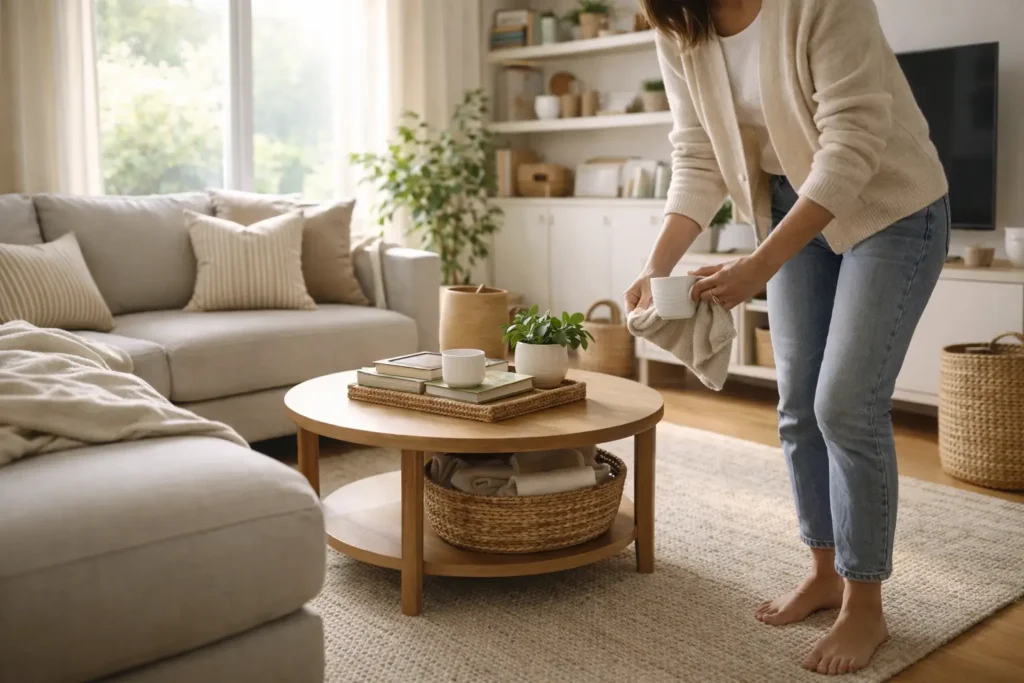
Mail collects near the entryway. Kitchen counters gather small objects. Bedroom surfaces fill with items that were meant to be put away later.
These changes usually happen gradually.
This gradual accumulation is closely related to what many households experience when they wonder why their house gets messy so fast, where small daily actions quietly create disorder over time.
Without simple systems in place, small amounts of clutter accumulate across different areas of the home until organization begins to feel overwhelming.
This is why many households rely on a home organization checklist. Instead of trying to organize everything at once, a structured checklist helps maintain order through consistent routines.
By dividing organization tasks into daily, weekly, monthly, and seasonal actions, it becomes much easier to keep every part of the home functional and organized.
Why a Home Organization Checklist Makes Organizing Easier
Most homes already have some form of cleaning routine. Floors are vacuumed, dishes are washed, and laundry is done regularly.
But cleaning and organizing are not always the same thing.
Cleaning focuses on surfaces and hygiene. Organization focuses on maintaining systems that prevent clutter from returning.
Without clear systems, everyday items slowly begin to accumulate:
- paperwork
- clothing
- kitchen tools
- personal items
- household supplies
Over time, these small accumulations disrupt the structure of the home.
A home organization checklist solves this problem by creating predictable routines that keep each area of the home functioning properly.
Instead of waiting until clutter becomes overwhelming, small actions maintain balance across the household.
This approach makes organization feel manageable and sustainable.
The Ultimate Home Organization Checklist
The ultimate home organization checklist divides organization tasks into manageable routines that maintain order across every area of the home.
An effective home organization checklist divides tasks into manageable time intervals.
Each type of routine supports a different part of the household system.
Some tasks are best handled daily, while others only require attention once a week or once a month.
Together, these routines create a complete system for maintaining an organized home.
Daily Home Organization Checklist
Daily routines focus on maintaining order in frequently used spaces.
These tasks usually take only a few minutes but prevent clutter from spreading across the home.
Typical daily organization tasks include:
- clearing kitchen counters
- returning items to their proper place
- sorting incoming mail or papers
- organizing entryway surfaces
- resetting the living room at the end of the day
- placing items back into storage baskets or drawers
- quickly reviewing high-traffic areas
Many households combine these habits with a daily home reset checklist, which focuses on restoring order before the day ends.
These small daily actions help maintain structure throughout the home.
Weekly Home Organization Checklist
Weekly routines address areas that gradually accumulate items during the week.
These tasks often involve reviewing spaces that receive frequent use.
Common weekly organization tasks include:
- organizing kitchen drawers and storage areas
- reviewing refrigerator contents
- restoring order in shared living spaces
- organizing bathroom storage areas
- sorting paperwork that accumulated during the week
- reviewing entryway storage systems
- organizing laundry areas
Many households follow a weekly home organization checklist to maintain these systems before clutter spreads into multiple rooms.
Weekly resets help maintain balance between daily habits and larger organization tasks.
Monthly Home Organization Checklist
Some areas of the home require less frequent attention but still benefit from regular review.
Monthly organization tasks usually focus on storage spaces and household systems that gradually become crowded.
Examples of monthly tasks include:
- reviewing storage baskets and containers
- organizing closets and wardrobe sections
- checking household supply storage
- decluttering drawers or cabinets
- reviewing seasonal household items
- resetting small storage systems across the home
A monthly home organization checklist helps maintain these areas without requiring large decluttering sessions later.
Seasonal Home Organization Checklist
Seasonal resets allow households to review larger systems that change throughout the year.
These tasks often involve adjusting storage and removing items that are no longer needed.
Typical seasonal organization tasks include:
- rotating seasonal clothing
- reviewing garage or storage spaces
- reorganizing closets
- decluttering decorative items
- adjusting household storage for changing routines
Seasonal resets help ensure the home continues to function well as daily habits change throughout the year.
Room-by-Room Home Organization Checklist
Another effective approach is organizing the home by room.
Different spaces in the home accumulate clutter in different ways.
A room-by-room checklist helps maintain organization across the entire house.
Kitchen Organization Checklist
The kitchen is one of the most active areas of the home and often collects clutter quickly.
Typical kitchen organization tasks include:
- clearing countertops
- organizing kitchen drawers
- reviewing pantry storage
- discarding expired items
- organizing cooking tools and utensils
Maintaining kitchen organization helps keep daily routines efficient.
Bedroom Organization Checklist
Bedrooms often accumulate clothing and personal items over time.
A bedroom organization routine may include:
- reviewing clothing storage
- organizing nightstands
- decluttering dresser surfaces
- sorting laundry areas
- resetting closet storage systems
These small tasks help maintain calm and comfortable sleeping spaces.
Living Room Organization Checklist
Living rooms are shared spaces that often collect everyday objects.
Typical tasks include:
- organizing coffee tables
- resetting decorative surfaces
- storing blankets and pillows
- organizing books or magazines
- reviewing small storage baskets
Regular resets keep the room feeling open and functional.
Entryway Organization Checklist
Entryways are high-traffic areas where clutter often appears first.
A simple checklist may include:
- organizing shoes
- clearing entry tables
- sorting mail
- resetting key storage areas
- organizing bags and daily items
Maintaining entryway organization helps create a smoother start to daily routines.
Bathroom Organization Checklist
Bathrooms require occasional organization to maintain efficiency.
Tasks may include:
- organizing drawers and cabinets
- removing empty containers
- resetting frequently used items
- reviewing household supply storage
These simple steps help keep bathroom spaces clean and functional.
Daily Habits That Help Maintain an Organized Home
Checklists work best when supported by consistent habits.
Many organized homes rely on small routines such as daily habits that keep your home organized to maintain order between larger resets.
Examples include:
- returning items to storage immediately
- resetting surfaces at the end of the day
- organizing incoming items such as mail
- maintaining simple storage systems
- reviewing clutter-prone areas regularly
These habits reinforce the structure created by the checklist.
Weekly and Monthly Organization Tasks
Daily routines maintain the most visible areas of the home.
Understanding how often you should declutter your home can also help maintain long-term order across the household.
For example:
- weekly resets maintain kitchen and living spaces
- monthly resets review storage areas and drawers
- seasonal resets reorganize larger storage systems
Together, these layers create a balanced organization system.
How to Keep Your Home Organization System Consistent
Consistency is more important than perfection when maintaining organization.
Simple strategies make these routines easier to follow.
Helpful approaches include:
- choosing consistent days for organization tasks
- using written checklists
- focusing on small actions rather than large projects
- maintaining simple storage systems
- combining organization routines with existing habits
Over time, these routines become automatic.
Building a Simple Home Organization Routine
An organized home is rarely the result of a single large cleaning effort.
Instead, organization develops through consistent routines that maintain structure across different areas of the home.
A home organization checklist provides a simple framework for maintaining order without feeling overwhelmed.
By combining daily habits, weekly resets, monthly reviews, and seasonal organization, households create systems that support a clean and functional environment.
Conclusion
Maintaining an organized home becomes much easier when routines replace occasional large organizing sessions.
A structured home organization checklist helps divide organization tasks into manageable actions that keep every part of the home functioning properly.
Over time, these small routines prevent clutter from building up and make everyday living spaces easier to maintain.
With consistent habits and simple systems, an organized home becomes not only achievable but sustainable.