Home organization routine guide — keeping your home organized is not about constant cleaning or large bursts of motivation. In most cases, it depends on having a simple, repeatable system that guides daily actions and prevents clutter from building up over time.
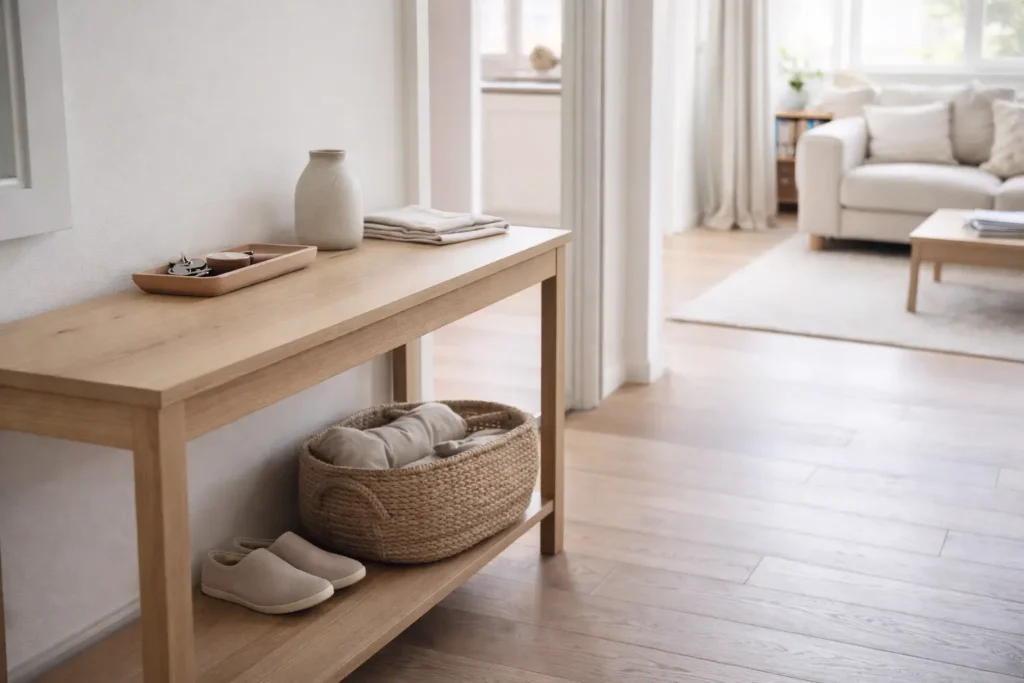
Many households struggle not because there is too much to do, but because small tasks accumulate faster than they are handled. This pattern is closely related to what many people experience when they wonder why their house gets messy so fast, where small daily behaviors gradually turn into visible clutter.
A structured home organization routine solves this problem by turning scattered actions into a consistent system that keeps the home functioning smoothly every day.
Why Most Homes Become Disorganized Over Time
Disorganization rarely happens all at once. Instead, it develops through small, repeated behaviors that seem insignificant in the moment.
Items are placed temporarily instead of returned to their proper place. Surfaces begin to collect objects. Daily tasks are delayed until they require more time and effort to complete.
Over time, these small patterns create a cycle where disorder returns faster than it can be managed. This is why many people feel like their home never stays organized, even when they clean regularly.
Without a clear routine, the home depends on effort and memory instead of structure — and this is where organization begins to break down.
Home Organization Routine Guide: How the System Works
A home organization routine is a structured system of small, repeatable actions that maintain order across the home.
Instead of reacting to clutter after it appears, the routine prevents it from forming in the first place.
This system is built on three core layers:
- Daily habits that prevent accumulation
- Reset routines that restore balance
- Checklists that maintain long-term organization
Together, these layers create a home that stays organized with less effort over time.
The Three Layers of an Effective Home Organization System
The most effective organization routines are simple and structured. Each layer supports a different aspect of maintaining order.
1. Daily Habits (Prevention)
Daily habits are small actions that prevent clutter from building up throughout the day.
Examples include:
- Returning items immediately after use
- Keeping frequently used areas clear
- Managing small tasks before they accumulate
These habits reduce friction and keep the home functioning efficiently.
Many households struggle not because there is too much to do, but because small tasks accumulate faster than they are handled. These patterns are similar to those described in daily habits that keep your home organized, where small actions consistently maintain order.
2. Reset Routines (Stabilization)
Reset routines restore order at specific moments during the day.
They act as checkpoints that bring the home back to a clean and organized baseline.
Common reset routines include:
- A short evening reset
- A nightly routine before bed
- A quick morning reset
These routines prevent small disruptions from becoming larger problems.
A structured approach to this can be seen in a daily home reset checklist, which helps restore order at the end of each day.
3. Checklists (Maintenance)
Checklists provide structure for tasks that are not done daily.
They ensure that deeper organization and cleaning tasks are handled consistently.
Typical examples include:
- Weekly home organization checklists
- Monthly reset routines
- Daily cleaning checklists for essential upkeep
This layer prevents long-term accumulation and keeps the home balanced.
Many households rely on a weekly home organization checklist to maintain structure before clutter spreads across multiple areas.
A practical example is a daily cleaning checklist, which keeps essential tasks under control and prevents accumulation between resets.
How to Build a Simple Home Organization Routine
An effective routine does not need to be complex. In fact, simpler systems are easier to maintain over time.
Step 1: Define Your Daily Non-Negotiables
Choose a small number of tasks that must happen every day.
For example:
- Clearing main surfaces
- Managing dishes and laundry
- Returning frequently used items
These actions create a stable foundation.
Step 2: Add a Daily Reset Moment
Introduce a short reset period at the end of the day.
This reset should focus on:
- Restoring key areas
- Preparing the home for the next day
- Preventing overnight accumulation
Consistency matters more than duration.
Step 3: Schedule Weekly and Monthly Checkpoints
Assign specific times for deeper organization tasks.
This prevents tasks from piling up and reduces the need for large cleaning sessions.
Instead of reacting to disorder, the system maintains control through predictable intervals.
Why Simple Systems Work Better Than Complex Ones
Many organization systems fail because they are too complicated to maintain.
When a system requires too many steps or too much effort, it becomes difficult to follow consistently. Over time, this leads to inconsistency, and clutter begins to return.
Simple systems work because they:
- Are easy to repeat daily
- Require less decision-making
- Fit naturally into existing routines
The goal is not perfection, but consistency.
Common Mistakes That Break Organization Routines
Even a well-designed routine can fail if certain patterns are not addressed.
The most common mistakes include:
- Relying on motivation instead of structure
- Skipping small daily actions
- Letting tasks accumulate too long
- Creating systems that are too complex
Recognizing these patterns helps maintain a routine that continues to work over time.
How a Structured Routine Changes Your Home
When a home organization routine is applied consistently, the difference becomes clear.
Instead of reacting to clutter, the home stays under control. Tasks feel lighter, spaces remain functional, and daily life becomes more efficient.
Over time, the home shifts from a cycle of disorder and correction to a stable system that supports everyday living.
Final Thoughts
A home organization routine is not about doing more — it is about doing things in a structured and consistent way.
This approach becomes significantly more effective when supported by a complete household system that connects daily habits, resets, and long-term organization.
This becomes easier to sustain when supported by a simple system that keeps your home clean without stress, where consistency replaces pressure.
By combining daily habits, reset routines, and scheduled checklists, it becomes possible to maintain an organized home without constant effort.
The most effective systems are not the most complex ones, but the ones that are simple enough to repeat every day.