A daily cleaning checklist is one of the simplest ways to keep your home clean and organized without relying on long cleaning sessions or constant effort.
Many households struggle not because there is too much to clean, but because small tasks accumulate faster than they are handled. This pattern is closely related to what many people experience when they wonder why their house gets messy so fast, where small daily behaviors gradually turn into visible clutter.
By following a simple checklist, you can prevent this buildup and maintain a home that feels consistently under control.
Why a daily cleaning checklist works
Cleaning becomes overwhelming when tasks are delayed and allowed to build up. A daily cleaning checklist works by interrupting that cycle early.
It helps you:
- Prevent mess before it spreads
- Reduce the need for deep cleaning
- Keep routines predictable
- Lower the mental effort required to start
Instead of reacting to clutter, a checklist allows you to stay ahead of it.
Daily cleaning checklist: simple tasks you can follow every day
This daily cleaning checklist focuses on small, repeatable actions that take only a few minutes but make a significant difference over time.
1. Clear and reset surfaces
Remove items from visible surfaces such as countertops, tables, and desks.
This prevents clutter from spreading and keeps spaces visually clean.
2. Do a quick dish reset
Wash dishes, load the dishwasher, or rinse items immediately after use.
Even a short delay can cause dishes to accumulate quickly, a pattern often explained in why dishes pile up so fast in busy households.
3. Put items back in their place
Return objects to their designated location after use.
This simple habit prevents the slow buildup of misplaced items.
4. Handle laundry in small steps
Instead of waiting for laundry to pile up, manage it in small daily actions.
Start a small load, fold clothes, or put items away. This prevents the common issue described in why laundry piles up so fast, where small delays create overwhelming loads.
5. Do a quick floor reset
Pick up items from the floor and do a light sweep or vacuum if needed.
This keeps spaces functional and prevents dirt from spreading.
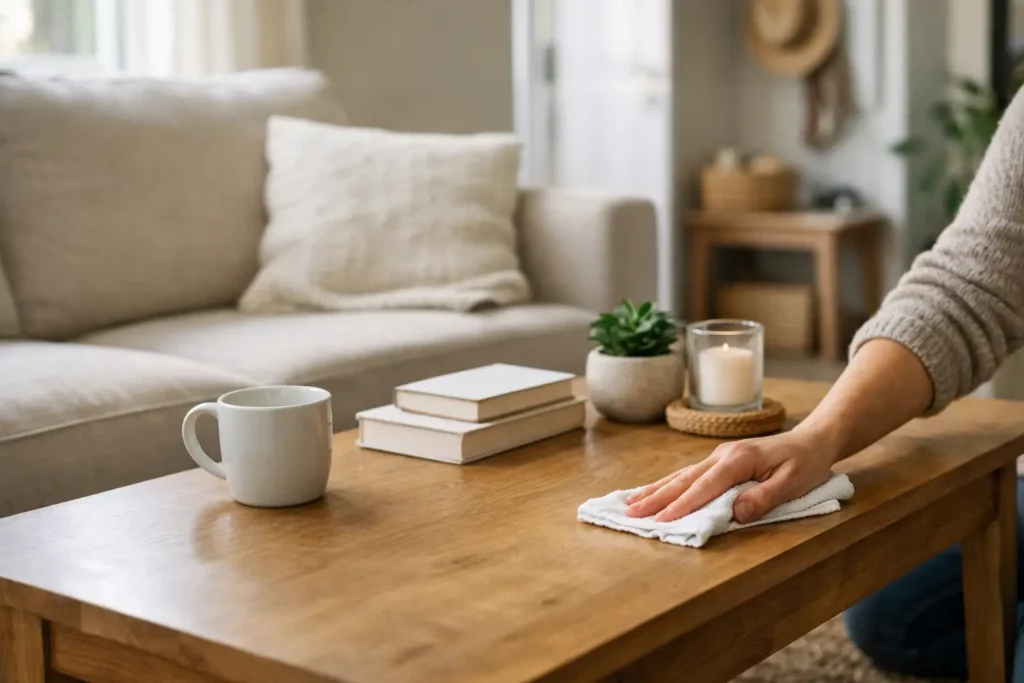
6. Wipe key areas
Clean frequently used surfaces such as:
- Kitchen counters
- Bathroom sink
- Dining table
This keeps your home feeling clean even with minimal effort.
7. Take out trash if needed
Empty small bins before they overflow.
This prevents odors and keeps spaces fresh.
8. Reset high-traffic areas
Focus on areas that get used the most:
- Entryway
- Living room
- Kitchen
These spaces tend to accumulate clutter faster than others.
9. Do a 5–10 minute reset
Set a short timer and quickly restore order in key areas.
This simple practice is often part of a nightly home reset routine that helps maintain consistency.
10. Prepare for the next day
Put things in place for the following day:
- Clear surfaces
- Organize essentials
- Reset shared spaces
This creates a smoother and less stressful start to the next day.
How to make this checklist sustainable
Trying to do everything perfectly every day is not necessary. The goal is consistency, not perfection.
Start small:
- Focus on the most impactful tasks
- Keep actions short and realistic
- Build the habit gradually
When combined with habits that prevent clutter, this checklist becomes easier to maintain over time.
Daily cleaning vs deep cleaning
Daily cleaning is not about making your home perfect. It is about preventing the need for intensive cleaning sessions.
By maintaining small tasks consistently, you reduce:
- Time spent cleaning
- Physical effort
- Mental overload
This approach works best when combined with a simple system to keep your home clean daily, creating a structure that supports long-term organization.
Conclusion
A clean home is not the result of occasional effort, but of consistent small actions.
A daily cleaning checklist helps prevent clutter, reduces overwhelm, and makes your home easier to maintain every day.
Over time, these actions become automatic, turning cleaning into a natural part of your routine rather than a constant burden.