Why does laundry feel never ending—even when you keep doing it every day?
If you’ve ever wondered why laundry feels never ending, you’re not alone.
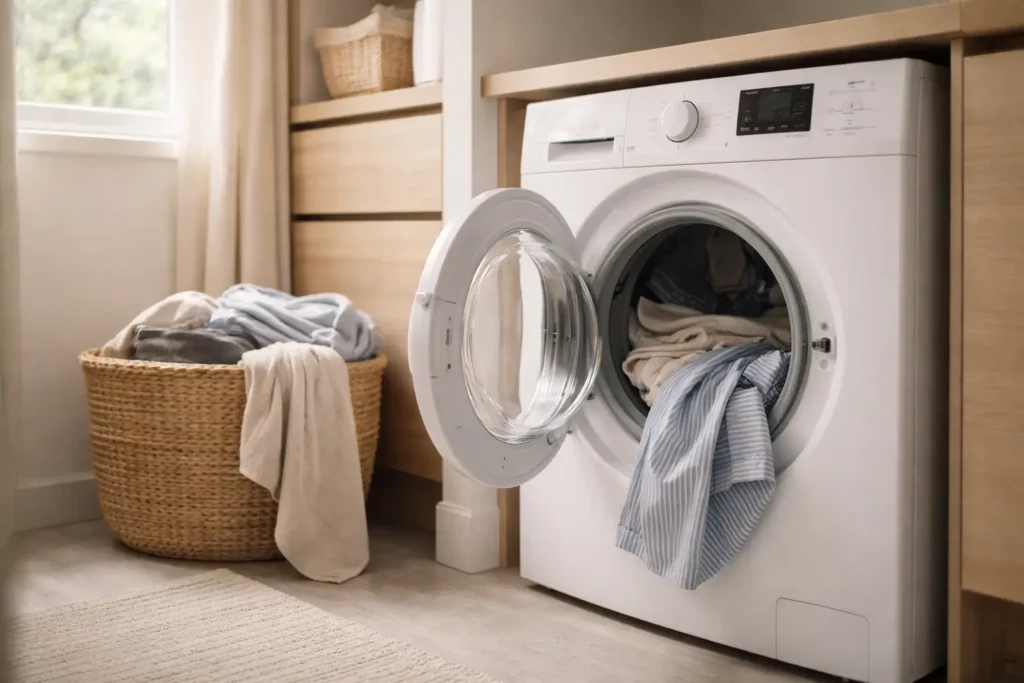
Laundry has a unique way of making progress feel invisible.
You wash clothes, dry them, fold them — and yet, somehow, there is always more waiting.
It doesn’t feel like a task you complete.
It feels like a loop you never exit.
This constant repetition creates a sense of fatigue, even when the actual workload isn’t overwhelming.
The problem isn’t just the amount of laundry.
It’s how the process interacts with your daily life.
Why Laundry Feels Never Ending
Laundry feels endless because it is directly connected to continuous daily activity.
Clothes are used every single day.
But laundry is often handled in delayed, disconnected stages.
This creates a loop:
use → accumulate → process partially → use again
Without a system that matches this flow, laundry never reaches a true stopping point.
This cycle becomes easier to understand when you look at why laundry is always piling up, where continuous use creates constant accumulation.
The Hidden Causes Behind the Endless Laundry Cycle
The feeling of never-ending laundry is not just about volume.
It’s caused by structural patterns that make completion difficult.
Laundry Is Not a Single Task
Laundry is a chain of actions:
- collecting
- sorting
- washing
- drying
- folding
- putting away
If any step is delayed, the process remains unfinished.
Completion Is Often Interrupted
Many people:
- wash and dry clothes
- delay folding
- postpone putting them away
This creates a backlog of “almost finished” tasks.
Laundry Competes With Daily Life
Laundry is rarely the only priority.
It competes with:
- work
- meals
- rest
- other household tasks
This leads to interruptions and incomplete cycles.
There Is No Defined End Point
Unlike other tasks, laundry has no clear finish line.
As soon as you complete one load, more clothes are already in use.
Systems Are Not Designed for Continuity
Most laundry routines are reactive.
They focus on catching up, not maintaining flow.
This is closely related to why cleaning never lasts, where tasks are completed without a structure that sustains long-term order.
Why Laundry Feels More Overwhelming Than It Is
Laundry often feels heavier than it actually is.
This happens because:
- progress is not visible
- completion is delayed
- effort feels repetitive
- results are temporary
This creates a psychological loop where the task feels larger than it is.
What Actually Breaks the Endless Laundry Cycle
To reduce the feeling of endless laundry, the goal is not to eliminate laundry.
It is to change how it flows.
1. Shift From Batching to Flow
Large laundry sessions create fatigue.
Smaller, continuous cycles reduce pressure.
2. Focus on Full Completion
Laundry is only complete when clothes are:
- folded
- stored
- returned to use
Anything less keeps the cycle open.
3. Reduce the Gap Between Steps
Shorter gaps between:
- washing
- drying
- folding
- putting away
prevent backlog.
4. Create a Predictable Laundry Rhythm
Consistency reduces decision fatigue.
A simple rhythm makes laundry easier to manage.
5. Treat Laundry as a Flow, Not a Project
Laundry is ongoing.
When treated as a project, it always feels unfinished.
This becomes much easier when guided by a household systems blueprint, where daily actions, routines, and maintenance work together as a unified system.
Practical Ways to Make Laundry Feel Manageable
Small adjustments can significantly reduce the feeling of endless laundry.
Use Short Laundry Sessions
Even 10–15 minutes can move the process forward.
Avoid “Later” Decisions
Delaying small steps creates backlog.
Complete One Load Fully
Finish all steps before starting another.
Limit Overflow Areas
Avoid spreading laundry across:
- chairs
- beds
- multiple rooms
Over time, this pattern follows the same cycle explained in why clutter keeps coming back, where unfinished actions create repeated accumulation.
Integrate Laundry Into Daily Life
Small, consistent actions reduce accumulation.
This becomes more effective when supported by daily habits that keep your home organized, which help maintain consistency across small actions.
Reset Laundry Daily
Even a quick reset prevents buildup.
This becomes even easier when you follow a daily home reset routine, which helps prevent small tasks from building into larger problems.
The Difference Between Endless Laundry and Controlled Laundry
Endless laundry:
- feels repetitive
- lacks completion
- creates mental fatigue
Controlled laundry:
- follows a flow
- has clear steps
- feels manageable
The difference is not effort.
It is structure.
The Long-Term Effect of a Better Laundry System
When laundry is structured:
- progress becomes visible
- tasks feel lighter
- completion becomes possible
Instead of feeling trapped in a loop, you move through a system.
Conclusion
If you’ve been asking why laundry feels never ending, the answer is not about doing more laundry.
It’s about how laundry fits into your daily routine.
Laundry never truly stops.
But the feeling that it never ends can be reduced.
By shifting from large, reactive tasks to smaller, consistent actions, you create a system that keeps laundry under control.
And over time, what once felt endless becomes predictable, manageable, and far less stressful.