A preventive home maintenance routine helps keep your home stable by addressing small issues before they become larger problems. For many households, a simple home maintenance routine is the most effective way to prevent buildup, reduce effort, and avoid costly repairs over time.
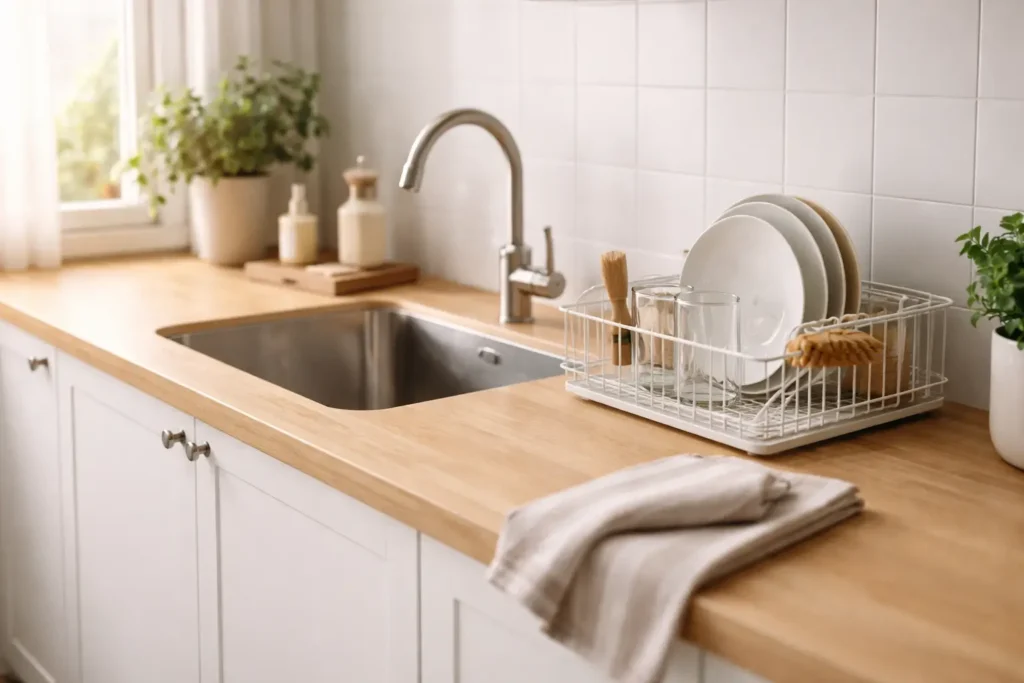
In busy homes, maintenance is often delayed. Tasks are postponed, minor issues go unnoticed, and systems gradually lose efficiency. Over time, this creates friction — spaces become harder to manage, and a home maintenance routine becomes more difficult to sustain without structure.
This is not caused by neglect. It is the result of a missing structure.
A preventive system allows you to maintain your home continuously, without needing large blocks of time or energy.
Why Most Homes Become Harder to Maintain Over Time
Homes do not become difficult to manage suddenly. The shift happens gradually through small, repeated patterns.
Surfaces are used but not reset. Storage areas become inconsistent. Airflow changes go unnoticed. Moisture builds slowly in hidden spaces.
Individually, these changes seem insignificant. But together, they create imbalance.
This gradual accumulation follows the same pattern described in why a house gets messy so fast, where small inefficiencies compound when systems are not consistently maintained.
Over time, this leads to:
- Reduced efficiency in daily routines
- Increased cleaning effort
- More frequent minor issues
- Higher likelihood of larger repairs
This pattern is closely related to why clutter keeps coming back, where recurring breakdowns happen when systems fail to support ongoing use.
Without a system, maintenance becomes reactive. You wait for something to feel “off” before taking action.
A preventive home maintenance routine changes this dynamic by addressing these small shifts early and keeping your home maintenance routine consistent over time.
Preventive Home Maintenance Routine for Busy Homes That Actually Works
A preventive home maintenance routine is especially important for busy homes, where tasks are often delayed and small issues accumulate over time. By following a simple home maintenance routine, you reduce the need for large efforts and keep your home easier to manage on a daily basis.
A preventive home maintenance routine is most effective when it is simple, layered, and easy to repeat. The goal is not to do more — it is to reduce the need for future effort.
This type of routine is especially important in busy homes, where time and attention are limited.
Instead of relying on occasional large efforts, the system distributes maintenance across small, manageable actions.
How to Structure a Preventive Home Maintenance Routine
A strong preventive system is built on layers. Each layer supports a different level of maintenance.
Daily Layer — Stability
Daily actions maintain basic functionality and prevent immediate clutter.
Examples:
- Resetting high-use surfaces
- Returning items to their place
- Addressing small messes immediately
These actions align with daily habits that keep your home organized, which form the foundation of a stable and low-maintenance home environment.
Weekly Layer — Reinforcement
Weekly tasks support consistency and prevent accumulation.
Examples:
- Cleaning key areas (kitchen, bathroom, living spaces)
- Checking for early signs of wear
- Maintaining laundry and storage flow
This layer reinforces structure and prevents drift.
Monthly Layer — Correction
Monthly tasks address deeper imbalances that are not visible daily.
This layer is most effective when guided by a monthly household maintenance checklist, which helps identify and correct hidden inefficiencies before they escalate.
Examples:
- Inspecting hidden areas (under sinks, behind appliances)
- Cleaning filters and ventilation systems
- Adjusting storage systems
This layer corrects inefficiencies before they become problems.
Seasonal Layer — Adaptation
Seasonal maintenance adjusts the home to environmental changes.
Seasonal adjustments are reinforced by a structured seasonal home maintenance checklist, which helps align the home with environmental changes throughout the year.
Examples:
- Monitoring humidity and airflow
- Inspecting insulation and sealing
- Preparing systems for temperature changes
This layer ensures long-term stability.
Key Tasks to Include in a Preventive Home Maintenance Routine
A preventive home maintenance routine should include three types of actions: observation, adjustment, and maintenance.
Observation Tasks
- Checking for early signs of buildup or wear
- Noticing changes in airflow, moisture, or function
- Identifying areas that feel harder to maintain
Observation allows you to act before problems become visible.
Adjustment Tasks
- Resetting storage areas
- Realigning frequently used spaces
- Improving accessibility of daily-use items
Adjustment keeps systems efficient and aligned with usage.
Maintenance Tasks
- Cleaning filters and hidden areas
- Maintaining appliances and surfaces
- Preventing buildup in moisture-prone zones
Maintenance preserves the condition of the home.
Areas That Require the Most Preventive Attention
Some areas naturally accumulate issues faster and should be prioritized.
High-Use Zones
Kitchens, living areas, and entryways experience constant activity. Without maintenance, these spaces quickly lose structure.
Hidden Areas
Spaces that are not regularly visible — such as behind appliances or inside cabinets — are often where problems begin.
Moisture-Prone Zones
Bathrooms, kitchens, and laundry areas require consistent monitoring to prevent buildup and long-term damage.
Functional Systems
Heating, cooling, plumbing, and ventilation systems need regular checks to maintain performance.
How to Maintain the Routine Without Adding Stress
A preventive home maintenance routine should reduce effort, not increase it.
Keep Tasks Small
Most actions should take only a few minutes. Short tasks are easier to repeat consistently.
Attach Tasks to Existing Habits
Link maintenance actions to routines you already follow:
- After cooking
- Before leaving a room
- During weekly cleaning
This reduces decision-making.
This becomes easier when supported by a structured approach such as a daily home reset routine, which helps maintain order with minimal effort.
Avoid Overcomplication
Too many tasks create resistance. A simple system is more sustainable.
Focus on Consistency, Not Perfection
The goal is not to maintain a perfect home, but a functional one.
Consistency over time produces better results than occasional intensive effort.
Common Mistakes That Reduce Effectiveness
Even a well-designed system can lose effectiveness if certain patterns are repeated.
Waiting for Visible Problems
Most issues begin before they can be seen. Preventive maintenance requires acting early.
Overloading the Routine
Adding too many tasks makes the system difficult to maintain.
Ignoring Small Signs
Minor changes in function or appearance often indicate deeper issues.
Inconsistency
Skipping maintenance cycles allows problems to accumulate again.
Why Preventive Maintenance Saves Time and Effort
At first, preventive maintenance may seem like additional work. In reality, it reduces the total effort required over time.
When systems are maintained:
- Cleaning becomes faster
- Problems are minimized
- Spaces remain functional
- Less time is spent correcting issues
Instead of dealing with accumulated problems, you maintain balance continuously.
This is especially valuable in busy homes, where time and energy are limited.
Conclusion
A preventive home maintenance routine is not about doing more — it is about preventing the need for more.
By focusing on small, consistent actions, you maintain stability, reduce effort, and avoid costly problems before they develop.
Over time, this approach transforms maintenance from a reactive task into a natural part of your home system.
And when that happens, keeping your home in order no longer depends on time — it depends on structure.