A monthly household maintenance checklist helps prevent small issues from turning into larger problems over time. Without a structured approach, minor inefficiencies tend to accumulate quietly, eventually affecting how your home functions on a daily basis.
This pattern is closely related to why a house gets messy so fast, where small inefficiencies accumulate due to a lack of consistent maintenance systems.
Most homes don’t become difficult to manage all at once. The shift usually happens gradually — through small delays, overlooked tasks, and systems that slowly lose alignment.
By introducing a simple monthly structure, you reduce friction, maintain stability, and keep your home running efficiently without constant effort.
Why a Monthly Household Maintenance Checklist Helps Maintain Order
Daily and weekly routines focus on visible cleanliness and surface-level organization. While daily routines are essential, they are most effective when supported by consistent systems, such as daily habits that keep your home organized, which help maintain baseline order between deeper maintenance cycles.
This is where problems begin.
Air filters clog without being noticed. Storage areas become inconsistent. Small signs of wear are ignored. Over time, these minor issues compound and start to affect your daily routines.
A monthly household maintenance checklist fills this gap by creating a structured moment to reset and recalibrate your home systems.
This structured approach becomes even more effective when combined with a broader preventive strategy. A more complete system can be seen in a preventive home maintenance routine, which focuses on identifying and resolving small issues before they affect daily function.
It helps to:
- Prevent buildup before it becomes visible
- Maintain efficiency across different areas of the home
- Reduce the likelihood of unexpected repairs
- Keep systems aligned with daily habits
Instead of reacting to problems, you stay slightly ahead of them.
Monthly Household Maintenance Checklist: What to Check Each Month
This monthly household maintenance checklist is designed to be practical, realistic, and easy to follow. The goal is not perfection, but consistency.
You can complete everything in one session or divide tasks across a few days.
General Home Areas
- Dust baseboards, trims, and door frames
- Clean light fixtures and lamps
- Wipe high-touch wall areas (hallways, switches, corners)
- Vacuum under furniture and less visible zones
- Check for small marks, dents, or early signs of wear
Kitchen Maintenance
- Clean inside cabinets and reorganize if needed
- Check pantry and fridge for expired items
- Clean appliance surfaces and edges (microwave, oven exterior, dishwasher filter)
- Wipe backsplash and corners often missed
- Inspect sink and faucet for slow leaks
Bathroom Maintenance
- Deep clean tile, grout, and corners
- Check for signs of moisture or mold
- Clean ventilation and exhaust fans
- Inspect under-sink areas for humidity or leaks
- Replace or wash shower liners and accessories
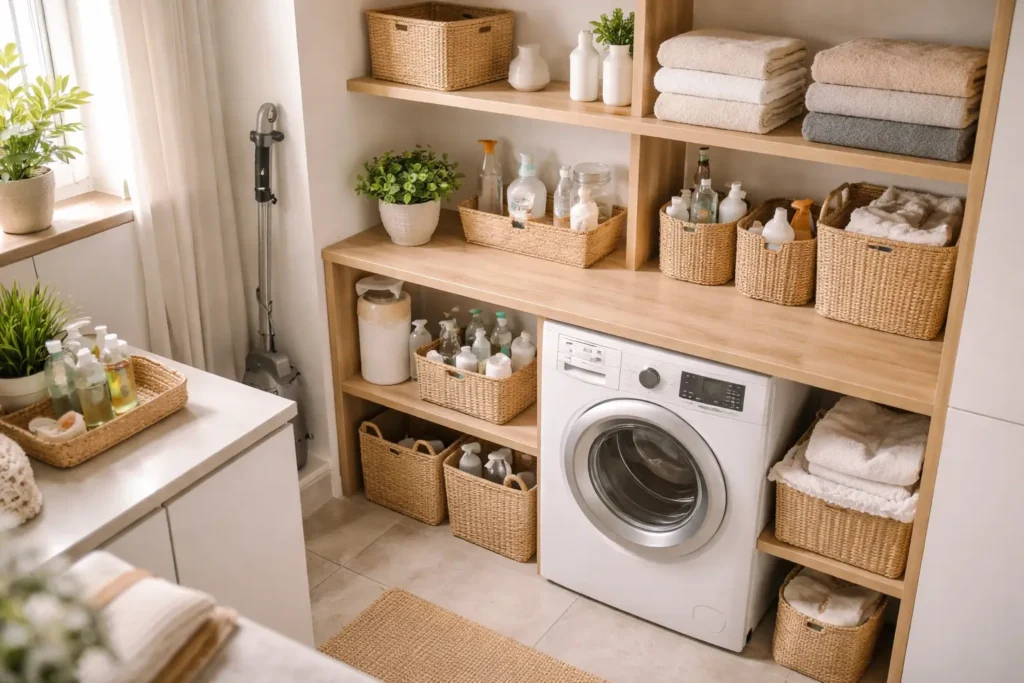
Laundry Area
- Clean washing machine drum and detergent compartment
- Empty and inspect dryer vent and lint trap
- Wipe surrounding surfaces and hidden corners
- Check hoses and connections for early wear
Storage and Organization Areas
- Reset drawers and remove unnecessary items
- Reorganize shelves that have lost structure
- Adjust storage zones to match current usage
- Check closets for overflow and redistribute items
Home Systems Check
- Replace or clean air filters
- Test smoke detectors if applicable
- Inspect doors and windows for sealing issues
- Pay attention to unusual noises in appliances
- Identify early signs of inefficiency in daily-use systems
Floors and Surfaces
- Deep vacuum carpets and rugs
- Clean edges and corners of hard floors
- Lift and clean under rugs
- Remove buildup in areas that are not part of weekly cleaning
Areas of the Home That Benefit Most From Monthly Maintenance
Not all areas of a home deteriorate at the same speed. Some zones naturally accumulate friction faster and benefit more from consistent monthly attention.
High-Traffic Zones
Entryways, kitchens, and living areas are used constantly. These spaces tend to show early signs of system fatigue — clutter buildup, surface wear, and reduced efficiency.
This recurring pattern is similar to why clutter keeps coming back, where systems fail to support ongoing use and organization.
Hidden Maintenance Zones
Under sinks, behind appliances, and inside cabinets often go unnoticed. However, these areas are where many problems begin, especially related to moisture, dust, and structural imbalance.
Functional Systems
Laundry areas, ventilation systems, and storage structures directly affect how smoothly your home operates. When these systems are not maintained, daily routines become slower and less predictable.
How to Keep a Monthly Organization Routine Consistent
The effectiveness of a monthly household maintenance checklist depends on consistency, not intensity.
You don’t need to do everything perfectly. You need to do it regularly.
Use a Fixed Time Anchor
Choose a predictable moment each month:
- First weekend
- Last day of the month
- A specific weekday
This reduces decision fatigue.
Break Tasks Into Sections
Divide the checklist into smaller blocks:
- One area per day
- Two to three sessions instead of one long session
This makes the process lighter and more sustainable.
Keep the Checklist Accessible
Store your checklist where you can easily refer to it:
- Printed version
- Notes app
- Planning system
Visibility increases consistency.
Focus on Maintenance, Not Deep Cleaning
This system is not about intensive cleaning. It’s about preventing decline.
Think in terms of:
- Adjusting
- Resetting
- Realigning
Not overhauling everything.
Combining Daily, Weekly, and Monthly Organization Systems
A home functions best when maintenance is layered.
Daily Systems
Daily systems often include quick resets that prevent accumulation, similar to a daily home reset routine, which maintains surface-level order and supports overall system stability.
- Quick resets
- Surface organization
- Habit-based actions
These keep the home usable.
Weekly Systems
- Cleaning routines
- Laundry cycles
- Visible order restoration
These maintain cleanliness.
This layer becomes more effective when structured through a consistent weekly system, such as a weekly home reset routine, which reinforces order and prepares the home for monthly maintenance.
Monthly Systems
- Structural adjustments
- Hidden area maintenance
- System corrections
These prevent long-term problems.
When the monthly layer is missing, daily and weekly efforts become less effective. Tasks feel repetitive because underlying issues are never addressed.
When all three layers work together, the home becomes easier to manage over time — not harder.
Conclusion
A monthly household maintenance checklist is a simple but powerful way to keep your home functioning smoothly without constant effort.
Instead of allowing small problems to accumulate, you create a consistent rhythm of maintenance that keeps everything aligned.
Over time, this reduces friction, improves efficiency, and makes daily routines feel lighter and more predictable.
The goal is not to do more — it’s to maintain what already works before it begins to break down.