Why does my house get dirty so fast is a common question, especially when your house gets dirty quickly after cleaning and it feels like the mess keeps coming back. When your house gets messy again shortly after cleaning, or even feels like it is always messy no matter what you do, the problem is usually not effort, but structure and daily patterns that continuously recreate dirt and clutter.
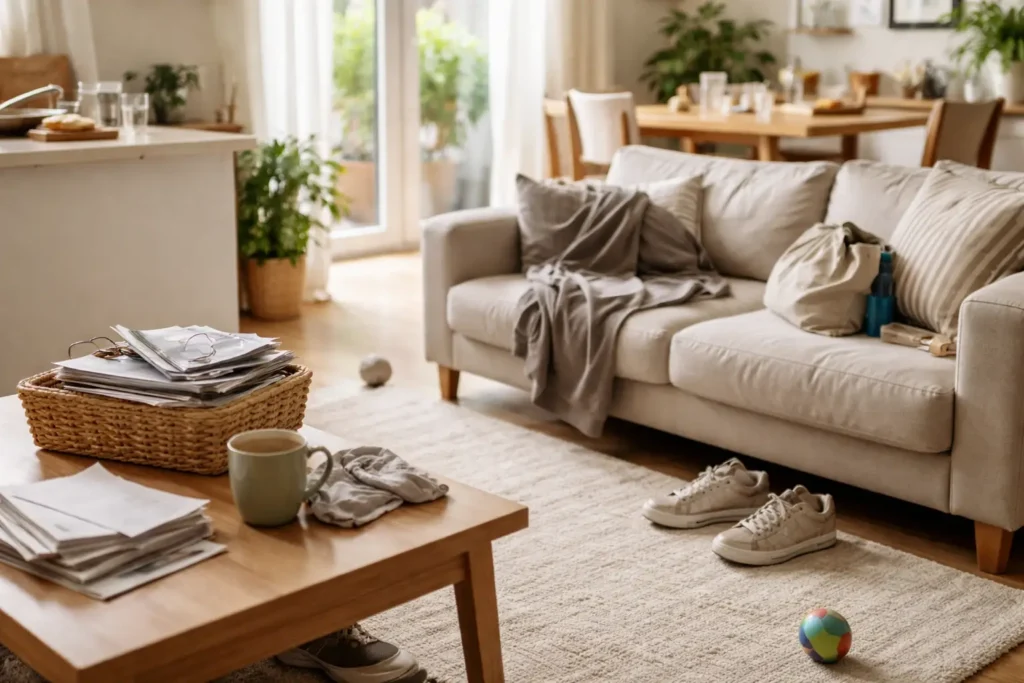
This creates frustration because it feels like effort is not translating into results. However, the issue is rarely about cleaning itself. In most cases, it is linked to how the system is structured, something that becomes clearer when looking at a complete home organization blueprint designed for long-term stability.
A home becomes dirty quickly because of repeated small actions, constant movement, and patterns that cause the house to get messy again throughout the day.
Why Does My House Get Dirty So Fast (And Why It Gets Messy Again Quickly)
At its core, a house gets dirty quickly because there is no structure controlling how mess is generated and contained, which allows dirt and clutter to build up again shortly after cleaning.
Cleaning resets a space, but it does not stop the processes that create dirt and clutter.
Why Does My House Get Dirty So Fast Even After Cleaning
Many people notice that even after cleaning, the house gets dirty again very quickly. This happens because cleaning resets the space, but does not interrupt the daily patterns that continuously generate mess, movement, and accumulation.
Throughout the day, multiple factors contribute to this:
- movement between indoor and outdoor environments
- repeated use of surfaces
- objects being relocated without being returned
- accumulation of small, unnoticed debris
Without a system to regulate these patterns, the home gradually returns to a state of disorder, often making the house feel messy again shortly after cleaning or even feel like it is always messy.
This recurring pattern is one of the main reasons people feel stuck in an endless cleaning cycle. Even after putting in effort, the same conditions that created the mess are still in place, which is why the disorder quickly returns. This dynamic is closely related to why cleaning doesn’t seem to last, where repeated patterns continue to recreate clutter despite consistent effort.
This is not a failure of effort—it is a failure of structure. This structural gap is one of the main reasons why systems break down over time.
Hidden Causes That Make Homes Get Dirty Quickly
Some of the most impactful causes are not immediately visible, but they explain why a house gets dirty quickly even when it is cleaned regularly.
These structural issues play a critical role in why systems break down over time, a pattern explored in more depth in why home organization systems fail.
Entry Points That Spread Dirt
The main source of dirt is often the entrance of the home.
Shoes, bags, and external elements introduce dust and particles. Without containment, these spread into other rooms.
Even small daily exposure can accumulate and affect multiple areas of the house.
This pattern becomes more noticeable in homes where disorder returns quickly, making it feel like the house is always messy, a pattern often linked to why cleaning doesn’t seem to last, where repeated patterns recreate disorder even after effort.
Undefined Drop Behavior
When items don’t have a defined place, they are temporarily placed—and then forgotten.
This includes:
- keys
- bags
- clothing
- everyday objects
These temporary placements accumulate and create visible disorder.
Surfaces That Collect Everything
Flat surfaces naturally become storage areas.
Without limits, they attract:
- random items
- objects in transition
- unfinished tasks
The more accessible the surface, the faster it fills.
Cleaning Without Continuity
Cleaning sessions are often isolated events.
Without follow-up maintenance:
- the system resets
- but does not stabilize
This creates a cycle where cleaning becomes reactive instead of preventive.
Friction in Daily Systems
If returning an item requires effort, it will not happen consistently.
Examples of friction:
- storage too far from usage
- complicated organization systems
- lack of accessibility
Friction slows down compliance and accelerates disorder.
Practical Systems That Reduce How Fast Your House Gets Dirty
To change how quickly your home gets dirty, the focus must shift from cleaning intensity to system efficiency.
Manage What Enters the Home
Controlling entry points reduces the spread of dirt.
Practical steps include:
- removing shoes at the entrance
- using mats to capture debris
- assigning space for incoming items
This prevents dirt from spreading across multiple rooms.
Create Natural Drop Zones
Every frequently used item should have an intuitive location.
A good drop zone is:
- easy to reach
- positioned along natural movement paths
- simple to maintain
When items have a predictable destination, they are less likely to be left randomly.
Limit Surface Exposure
Surfaces should not be open to unlimited accumulation.
Instead:
- define what belongs on each surface
- use containers or trays to group items
- reset surfaces regularly
This reduces the speed of visible clutter formation.
Introduce Micro-Resets
Short, consistent actions prevent accumulation.
Examples:
- quick resets after meals
- clearing key areas before the end of the day
- returning items immediately after use
Micro-resets reduce the need for large cleaning efforts.
These small corrections become significantly more effective when combined with a structured weekly home reset system that stabilizes the home on a consistent basis.
Simplify the System
If a system is difficult to follow, it will not be sustained.
Focus on:
- reducing steps
- simplifying storage
- making access easier
A system that is easy to use becomes automatic over time.
This approach aligns with the idea behind a low effort home system, where simplicity increases consistency and reduces long-term system breakdown.
Simple Actionable Tips to Keep Your Home Cleaner for Longer
Small adjustments in daily behavior can significantly reduce how fast your home gets dirty.
Keep Tools Within Reach
When cleaning tools are easily accessible, small actions happen naturally.
Examples include:
- cloths in the kitchen
- quick-access cleaning supplies
- simple tools for immediate use
Accessibility encourages consistency.
Prioritize High-Impact Areas
Not all areas contribute equally to the perception of cleanliness.
Focus on:
- kitchen counters
- living room surfaces
- entry areas
Maintaining these spaces creates a sense of order across the home.
Reduce Incoming Volume
The more items enter the home, the more there is to manage.
To reduce this:
- filter what comes in
- organize items immediately
- avoid accumulation at entry points
Control at the source reduces workload.
Build a Light Routine
A simple routine is more sustainable than occasional intensive cleaning.
For example:
- 5–10 minutes daily
- small resets throughout the day
- weekly adjustments
Consistency is more important than duration.
Identify Patterns Instead of Reacting
Observe where mess appears repeatedly.
This reveals:
- structural weaknesses
- system gaps
- areas of friction
Addressing the cause is more effective than cleaning the result.
Extending Cleanliness Through System Design
One of the most effective ways to slow down how quickly your home gets dirty is to design systems that extend the lifespan of cleanliness.
Instead of thinking in terms of cleaning frequency, think in terms of how long cleanliness lasts.
This can be achieved by:
- reducing the number of actions required to maintain order
- creating predictable routines
- aligning storage with behavior
When systems are designed with longevity in mind, the home naturally stays cleaner for longer periods without additional effort.
Conclusion
Understanding why does my house get dirty so fast helps explain why your house may feel messy all the time and changes the way you approach cleaning and organization.
The issue is not that cleaning doesn’t work—it’s that there is no structure maintaining the results.
When you control entry points, reduce friction, and implement simple systems, the rate at which dirt and clutter accumulate decreases significantly, making it easier to keep your house clean for longer periods.
Instead of constantly reacting to mess, you create a home that stays consistently clean with less effort and more stability, especially when integrated into a complete daily, weekly and monthly home system designed for long-term consistency.