A weekly home reset system is one of the most effective ways to maintain a clean, organized, and functional home without relying on constant daily cleaning. Instead of trying to manage every task every day, a weekly reset focuses on restoring order at predictable intervals. During a normal week, homes naturally accumulate small forms of clutter. Surfaces collect objects, laundry begins to pile up, and small areas of disorder gradually appear in different rooms. Many households notice patterns explained in why laundry piles up so fast, where small daily clothing cycles gradually turn into larger loads.
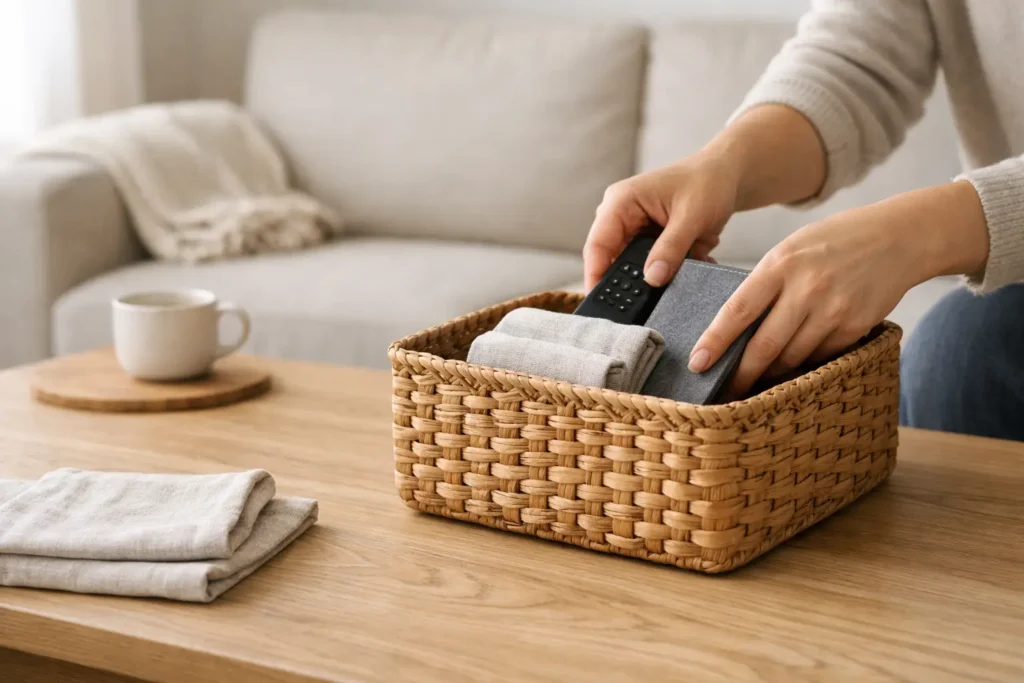
A structured weekly reset solves this problem by creating a consistent moment when the household returns to balance. Rather than reacting to clutter after it spreads, the reset restores organization before the situation becomes overwhelming.
When practiced consistently, a weekly home reset system allows the home to return to an organized baseline every week.
What Is a Weekly Home Reset System and Why It Works
A weekly home reset system is a short, structured routine designed to restore overall order in the home once per week.
Unlike daily habits that manage small tasks, the weekly reset focuses on larger household patterns. It restores the organization of areas that gradually drift out of order during normal routines.
This approach works because clutter rarely appears all at once. Instead, disorder develops gradually through small daily disruptions.
Throughout the week, common changes include:
- items temporarily placed in the wrong areas
- surfaces slowly collecting objects
- small cleaning tasks postponed
- storage systems drifting out of alignment
Individually, these changes seem minor. Over time, however, they accumulate and create the impression that the entire home is disorganized.
The weekly home reset system restores balance by addressing these small disruptions at once. Instead of deep cleaning, the routine focuses on restoring the basic structure of the home.
As a result, the home consistently returns to an organized state every week.
The Step-by-Step Weekly Home Reset System
The weekly reset does not require deep cleaning. Its purpose is simply to restore functional order in the spaces that experience the most activity during the week.
Most households can complete the routine in 45 to 90 minutes, depending on the size of the home.
Following the same sequence each week helps make the system efficient and predictable.
1. Reset Entry Areas
Entryways are often the first places where clutter accumulates.
Shoes, bags, jackets, and small items naturally gather in this space as people move in and out during the week.
Start the weekly reset by restoring order here:
- align shoes neatly
- hang jackets
- empty bags of loose items
- clear small surfaces
When the entry area is organized, the home immediately feels more structured.
2. Restore Kitchen Order
The kitchen is typically the most frequently used space in the home.
A weekly reset should focus on restoring its core structure:
- clear countertops
- return small appliances to their places
- wipe key surfaces
- remove expired food from the refrigerator
- reset dish areas
This step ensures that the kitchen returns to a functional and organized baseline.
3. Reset Living Spaces
Living rooms tend to accumulate everyday objects throughout the week.
Take a few minutes to restore balance:
- fold blankets
- straighten cushions
- return books and magazines to shelves
- clear coffee tables and side tables
These small adjustments help the main living spaces feel calm again.
4. Restore Bedroom Surfaces
Bedrooms also collect small items during busy weeks.
During the reset:
- clear nightstands
- fold or hang clothing left on chairs
- reset dresser surfaces
- return personal items to drawers
These small changes quickly restore the visual calm of the room.
5. Check Laundry Flow
Laundry systems often fall out of rhythm during busy weeks.
The weekly reset is a good moment to restore the flow:
- finish remaining loads
- fold clothing waiting in baskets
- return items to closets
This prevents laundry from becoming a long-term source of clutter.
6. Reset Small Household Systems
The final step of the weekly home reset system focuses on the small systems that support daily organization.
Examples include:
- sorting mail or documents
- clearing small storage baskets
- returning misplaced items to storage areas
- resetting shared desks or counters
These adjustments help maintain the overall structure of the home.
How a Weekly Home Reset System Keeps Your Home Organized
A weekly reset works best when it focuses on the areas that influence household organization the most.
While the weekly reset restores the overall structure of the home, smaller routines throughout the week make the process even easier. Many households adopt a short evening routine to reset surfaces, return misplaced items, and prepare spaces for the next day. A simple example is described in this nightly home reset routine.
Not every room requires attention each week. Instead, concentrate on the spaces where daily life creates the most disruption.
Common areas include:
Entry Areas
Entry spaces receive constant traffic and tend to collect items quickly.
Kitchens
Because kitchens are used multiple times each day, small disruptions accumulate easily.
Living Rooms
Shared spaces often collect objects from different household members.
Bedrooms
Bedrooms benefit from quick resets that restore calm and order.
Utility Areas
Laundry areas, storage corners, and small workspaces often drift into disorder without periodic resets.
By focusing on these spaces, the weekly home reset system restores order where it matters most.
Tips for Maintaining a Weekly Home Reset System
Like any routine, the weekly reset becomes easier when it follows consistent habits.
Many households also benefit from establishing small daily habits that support long-term organization. For example, simple routines such as resetting surfaces, returning objects to their storage areas, and clearing small clutter at the end of the day can significantly reduce the effort required during the weekly reset. You can explore several examples in daily habits that keep your home organized.
Several simple strategies make the system sustainable.
Choose a consistent day
Many households perform their weekly reset on Sunday afternoon or Saturday morning. Choosing a regular time helps the routine become automatic.
Keep the reset focused
The purpose of the reset is restoring order, not deep cleaning. Avoid adding tasks that expand the routine unnecessarily.
In addition to restoring order, it is also important to prevent small issues from building up over time. A practical example can be seen in weekly household maintenance tasks most homes ignore, which focus on maintaining key areas before problems become visible.
Use a timer if needed
Setting a timer for each section helps maintain efficiency and prevents the reset from becoming overwhelming.
Involve other household members
Dividing small tasks among family members significantly reduces the time required to complete the routine.
Maintain daily habits
Daily organization habits complement the weekly reset. When daily clutter is managed, the weekly routine becomes much faster.
Some households also combine a weekly reset with a short daily routine. Even a five-minute reset at the end of the day can prevent clutter from accumulating during the week. If you want to explore how this works, you can read about a practical daily home reset checklist that complements a weekly organization system.
Conclusion
Maintaining an organized home does not require constant cleaning or complicated systems. In many cases, the most effective strategy is simply creating predictable routines that restore order regularly.
A weekly home reset system provides that structure. By dedicating a short period of time each week to restoring key areas of the home, households can prevent clutter from accumulating and maintain a calm, functional environment.
When combined with simple daily habits, the weekly reset becomes a powerful system for maintaining long-term household organization.
Over time, this routine transforms organization from a stressful task into a natural rhythm of everyday living.