Why do kitchen counters get cluttered so fast in everyday life? In many homes, small items gradually accumulate throughout the day, turning kitchen counters into convenient drop zones for everyday objects.
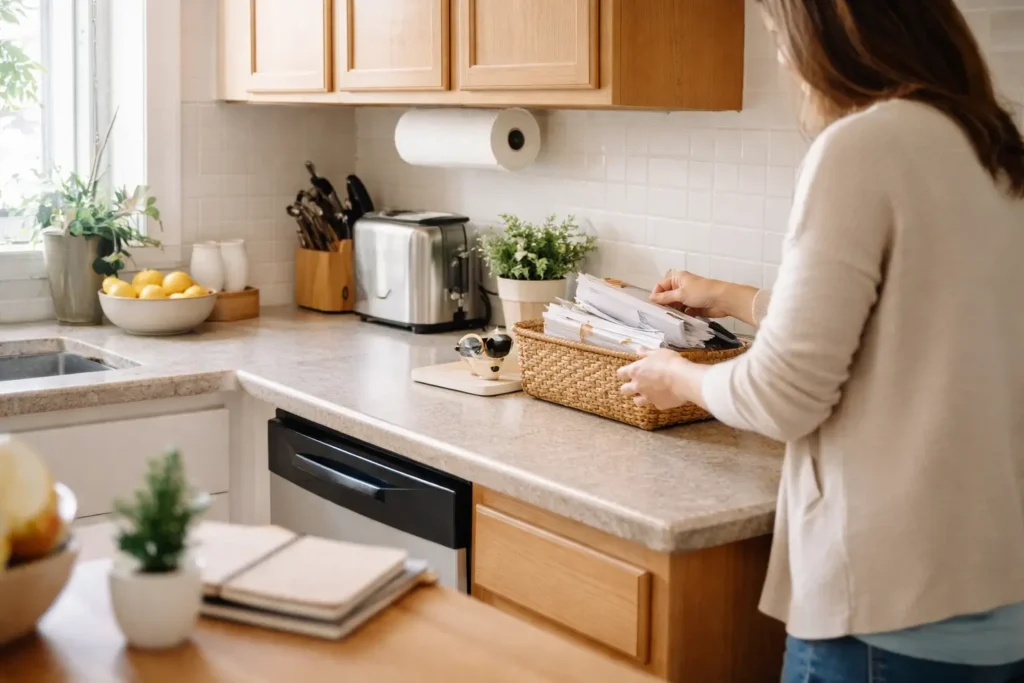
Kitchen counters are open, accessible, and used constantly. Because of this, they often collect items such as mail, groceries, utensils, and small personal belongings. What begins as a few harmless objects can quickly turn into visible clutter.
Understanding why kitchen counters get cluttered so quickly helps reveal a simple pattern inside many households. When small daily habits and storage systems are slightly out of alignment, clutter begins to appear almost automatically.
The good news is that this pattern is predictable. Once the causes are understood, simple habits and small organizational systems can keep counters clear with far less effort.
Why Kitchen Counters Attract Clutter So Easily
Kitchen counters occupy a unique role inside the home. They are used throughout the day for cooking, preparing food, unpacking groceries, and sometimes even for tasks unrelated to the kitchen.
Because counters are flat, visible, and conveniently located, they become natural resting places for objects that do not yet have a clear destination.
Several characteristics make kitchen counters particularly vulnerable to clutter:
- Central location in the home
- Frequent daily use
- Open surfaces without barriers
- Temporary placement during busy routines
In many households, counters act as transitional spaces where objects pause before being moved elsewhere. Unfortunately, these pauses often last longer than expected.
A single item may not appear problematic at first. But when multiple objects arrive throughout the day—mail, groceries, utensils, packaging, personal items—the surface quickly begins to feel crowded.
This pattern is closely related to the broader household dynamic explained in why your house gets messy so fast, where everyday routines gradually create visible clutter when small reset habits are missing.
Common Reasons Kitchen Counters Become Cluttered
Clutter on kitchen counters rarely appears suddenly. It usually forms through small daily actions that accumulate over time.
Below are several common reasons counters become cluttered so quickly.
Everyday Item Drop Zones
In many homes, kitchen counters function as informal drop zones. When people enter the house or move between rooms, they often place objects temporarily on the nearest surface.
Typical items placed on counters include:
• keys
• phones
• shopping bags
• wallets
• reusable containers
• small household tools
Because these items arrive throughout the day, the counter slowly fills without anyone noticing.
Lack of Storage Systems
Another common cause of counter clutter is the absence of simple storage systems.
When frequently used items do not have clearly defined storage spaces, they tend to remain visible. Over time, the counter becomes the default location for objects that lack a designated home.
For example:
- Cooking utensils without drawer organizers remain on the counter.
- Small appliances stay plugged in because cabinets feel inconvenient.
- Grocery items sit temporarily while waiting to be stored.
Without small systems guiding where things belong, surfaces become storage areas instead of preparation spaces.
Mail and Paper Accumulation
Paper is one of the most common contributors to counter clutter.
Mail, receipts, shopping lists, and small notes often arrive daily. Because these items are lightweight and temporary, they tend to accumulate quickly.
A small stack of envelopes can easily grow into a larger pile within just a few days.
This pattern mirrors the behavior described in why clutter keeps coming back, where small everyday items slowly accumulate when they are not processed immediately.
Temporary Placement Habits
Many people place objects on the counter with the intention of moving them later.
A grocery bag is set down briefly.
A cooking utensil is left out after dinner.
A package remains on the counter until it can be opened.
These temporary placements often become permanent simply because the next task interrupts the process.
Small delays gradually transform into visible clutter.
Small Habits That Keep Kitchen Counters Clear
Preventing clutter on kitchen counters does not require constant cleaning. Instead, it depends on a few small habits that maintain order throughout the day.
These habits help counters remain functional without requiring large organizing efforts.
Return Items Immediately After Use
Whenever possible, place objects back in their designated location immediately after using them.
A utensil returned to a drawer takes only seconds.
The same utensil left on the counter may remain there all day.
Clear Counters After Cooking
Cooking often introduces several temporary items to the counter.
Taking one or two minutes to clear the surface after meal preparation prevents objects from accumulating across multiple cooking sessions.
Process Mail Quickly
Paper clutter grows when mail sits untouched.
A simple system can help:
- Recycle unwanted mail immediately.
- Place important documents in a designated folder.
- Avoid leaving envelopes on counters.
Small habits like this prevent paper buildup.
Keep Only Essential Items on the Counter
Not every kitchen tool needs to remain visible.
Limiting counter items to a few essentials—such as a coffee maker or fruit bowl—helps maintain a cleaner visual space.
Simple Systems That Prevent Counter Clutter
Habits work best when supported by small household systems. These systems guide where objects belong and make it easier to maintain organization.
A few practical adjustments can significantly reduce counter clutter.
Create a Small Entryway Drop Zone
If keys, mail, and small items frequently appear on kitchen counters, consider relocating them to an entryway tray or small basket.
This simple change redirects incoming objects before they reach the kitchen.
Use Drawer Organizers
Drawer organizers help create clear spaces for everyday kitchen tools.
When utensils and gadgets have designated locations, they return to storage more naturally.
Assign Storage for Frequently Used Appliances
Many appliances remain on counters because cabinets feel inconvenient.
Creating easily accessible cabinet space for these appliances can free up significant counter space.
Introduce Small Surface Boundaries
Trays or baskets can act as boundaries for small groups of items.
Instead of objects spreading across the entire counter, they remain contained within a defined area.
How a Short Daily Reset Routine Prevents Kitchen Counter Clutter
Even with good habits and storage systems, counters benefit from a brief daily reset.
A reset routine simply means restoring surfaces to their intended state at a specific moment each day.
Typical reset actions include:
• clearing items left on counters
• returning misplaced objects to storage
• wiping kitchen surfaces
• organizing small paper items
Many households find that combining these actions with a daily home reset checklist helps ensure that clutter does not accumulate over time.
Short routines are often more effective than occasional deep cleaning because they maintain order continuously.
Some people also include these tasks in a short nightly home reset routine, which prepares the kitchen for the next day.
When counters begin the morning clear, it becomes much easier to maintain them throughout the day.
Conclusion
Kitchen counters become cluttered quickly because they sit at the center of daily household activity. Their open surfaces, convenient location, and constant use make them natural gathering places for everyday objects.
However, clutter on counters rarely results from laziness or poor organization. In most homes, it develops through small daily habits and temporary placements that gradually accumulate.
Understanding how clutter forms helps households maintain order through simple daily habits.
By combining clear storage spaces, small routines, and brief reset moments, kitchen counters can remain functional, calm, and easy to maintain—without requiring constant cleaning or large organizing projects.