How to keep your house clean without stress is not about doing more cleaning.
It’s about removing the pressure, simplifying your approach, and creating a system that works even when you’re tired, busy, or overwhelmed.
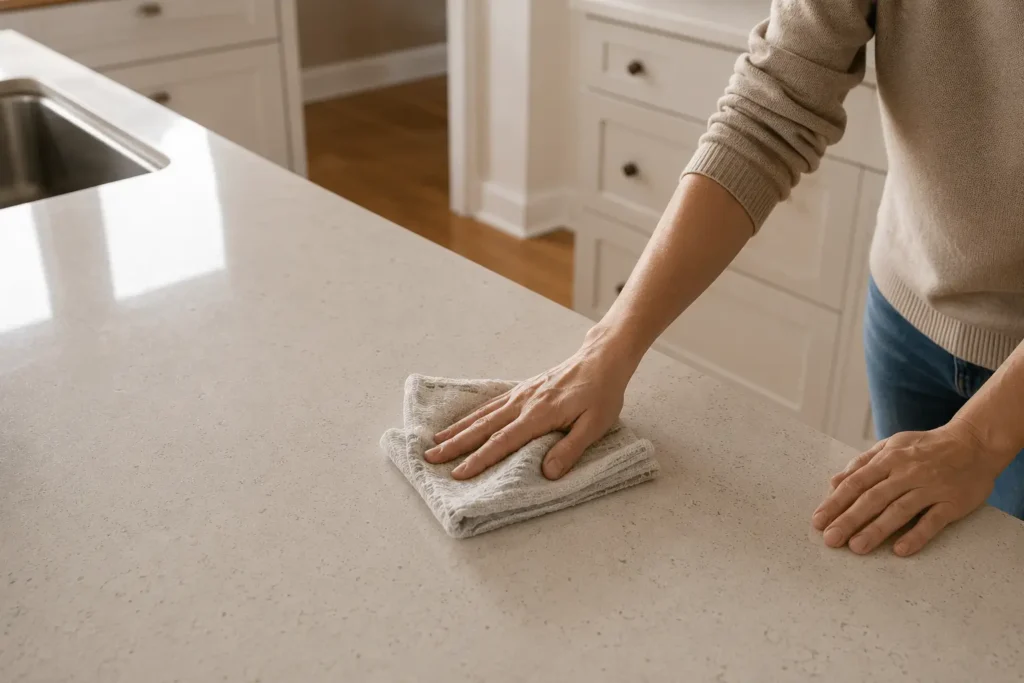
This feeling often comes from the same underlying patterns explained in why your house feels messy all the time, where small daily issues gradually turn into larger problems.
For many people, cleaning is not physically difficult.
What makes it stressful is the constant feeling of needing to catch up.
Tasks pile up. Small messes turn into larger ones. And instead of feeling manageable, everything starts to feel heavy.
The problem is not your effort.
It’s the way cleaning is structured.
Why Keeping Your House Clean Feels Stressful
Cleaning becomes stressful when it is unstructured, unpredictable, and mentally demanding.
When there is no clear system, every task becomes a decision.
You have to think about:
- what needs to be done
- where to start
- what matters most
- what can wait
This constant decision-making creates friction.
And over time, friction turns into avoidance.
Another reason cleaning feels stressful is that it often depends on energy and motivation.
On busy days, nothing gets done.
Then on another day, everything needs to be done at once.
This creates a cycle of:
- buildup
- overwhelm
- reset
- repeat
This creates the same cycle described in why household tasks never seem to end, where effort increases but results don’t last.
Stress is not caused by cleaning itself.
It is caused by inconsistency and lack of structure.
Hidden Causes That Make Cleaning Feel Overwhelming
There are patterns behind the stress that are not always obvious.
Too Many Decisions
If every cleaning task requires thinking, planning, and choosing, it becomes mentally exhausting.
A good system removes most of these decisions.
All-or-Nothing Thinking
Many people believe cleaning needs to be done “properly” or not at all.
This leads to postponing small actions.
And small delays quickly turn into larger problems.
Lack of Simple Systems
Without a system, everything depends on effort.
And effort is not consistent.
Overloaded Routines
Trying to do too much at once makes the system unsustainable.
The more tasks you add, the harder it becomes to maintain them.
Irregular Maintenance
When small tasks are skipped, they accumulate.
And accumulated tasks always feel heavier.
Practical Systems That Help You Keep Your House Clean Without Stress
The goal is not to clean more. A more practical way to simplify your routine is by following an ultimate home cleaning checklist that organizes essential tasks into simple, repeatable actions.
It is to make cleaning easier, lighter, and more predictable.
1. Reduce the Number of Decisions
Create simple rules instead of constant choices.
For example:
- surfaces are cleared after use
- items return to their place immediately
- small resets happen at fixed moments
When decisions are reduced, stress decreases.
2. Focus on Maintenance, Not Reset
Instead of waiting for mess to build up, keep things stable.
This means:
- small daily actions
- quick corrections
- no large cleaning sessions
Maintenance removes pressure.
3. Use Short, Repeatable Actions
Tasks should be:
- quick
- simple
- easy to repeat
If something takes too long, it will not happen consistently.
4. Anchor Tasks to Existing Routines
Connect cleaning to things you already do.
For example:
- wipe surfaces after cooking
- reset living room before going to bed
- organize items when entering the house
This reduces resistance.
5. Accept “Good Enough”
Perfection creates stress.
A clean home does not need to be perfect.
It needs to be functional.
Simple Actions That Make Cleaning Feel Easier
You don’t need a complex routine to reduce stress.
You need consistent, low-effort actions.
One way to reduce this pressure is by using quick resets, such as a 15 minute home reset, which helps restore order without creating additional stress.
Daily Actions
- clear surfaces after use
- return items immediately
- do small resets in active areas
Weekly Light Maintenance
- check areas that accumulate faster
- correct small buildup
- restore general order
Occasional Reset
- only when necessary
- lighter than traditional deep cleaning
- focused on specific areas
How to Keep Your System Consistent
Consistency is what removes stress over time.
Keep It Simple
The simpler the system, the easier it is to follow.
Lower Expectations
Not every day will be perfect.
Consistency matters more than intensity.
Make It Easy to Restart
Missing a day should not break your system.
It should be easy to continue.
Avoid Adding Too Much
More tasks do not mean better results.
They often create more stress.
Focus on Stability
A stable home feels clean even without perfection.
Conclusion
How to keep your house clean without stress is not about working harder or cleaning more often.
It’s about removing unnecessary pressure and building a system that supports your daily life.
When cleaning becomes simple, predictable, and low-effort, it stops feeling overwhelming.
And over time, maintaining a clean home becomes easier—not because you are doing more, but because your system finally works with you, not against you.