A home organization blueprint can make organizing a home feel much more manageable, especially when there is no clear starting point. Many people try to organize room by room or focus on quick fixes, but without a structured approach, the results rarely last, especially if you’ve ever wondered why does my house get messy so fast.
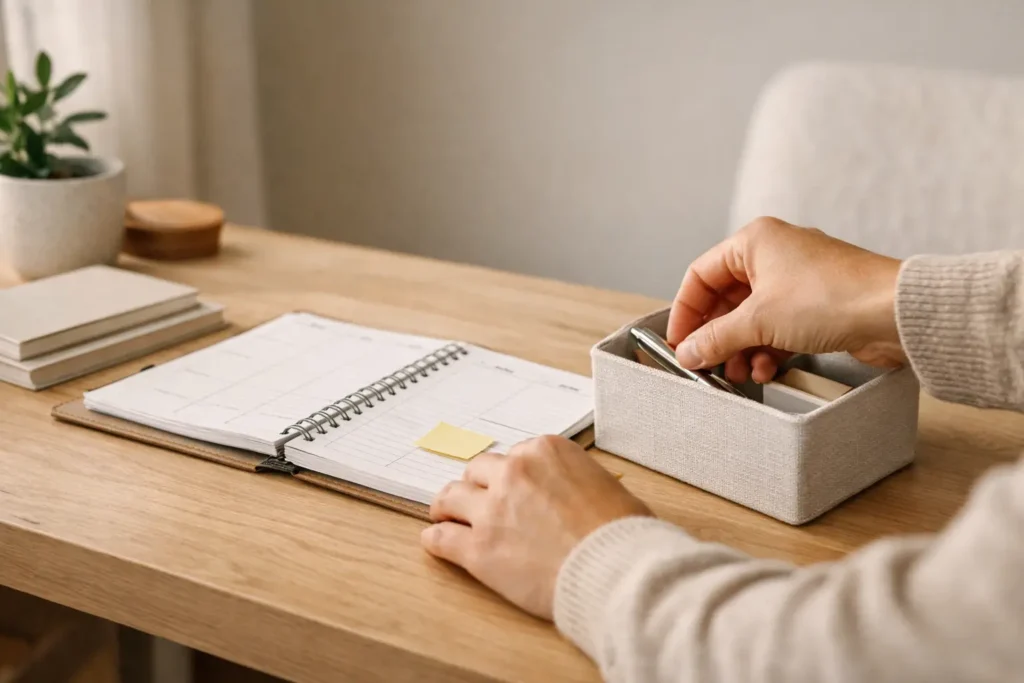
A blueprint is not just about organizing—it is about creating a system that supports how your home functions every day. Instead of reacting to clutter, you build a structure that prevents disorder from returning, which is often the reason behind why does clutter keep coming back.
In this guide, you will learn how a home organization blueprint works, why it is effective, and how to create one that keeps your home organized long-term.
What Is a Home Organization Blueprint and Why It Works
A home organization blueprint is a structured plan that defines how your home should function and how each space is maintained.
Rather than focusing only on cleaning or decluttering, a blueprint establishes:
- Clear zones for each activity
- Defined storage for all items
- Simple systems that are easy to maintain
This approach works because it removes guesswork. Instead of deciding what to do each time your home gets messy, the system is already in place.
The blueprint also creates consistency. When every space has a defined purpose and structure, maintaining order becomes much easier.
How a Home Organization Blueprint Works in Practice
A home organization blueprint works by breaking your home into manageable systems instead of treating it as one large, overwhelming space.
The idea is simple:
- Each area has a function
- Each item has a place
- Each routine supports the system and becomes even more effective when supported by a consistent household reset system.
When these three elements work together, your home stays organized without constant effort.
The blueprint is not about perfection. It is about creating a structure that adapts to daily life.
Step-by-Step Home Organization Blueprint
Creating your blueprint does not require complex planning. It can be built gradually using a simple step-by-step process.
1. Define the Function of Each Space
Start by identifying how each area of your home is used.
Ask:
- What happens in this space daily?
- What items are used here?
- What should this space feel like?
This helps you avoid random organization and focus on purpose.
2. Create Clear Zones
Once the function is clear, divide each space into zones.
Examples:
- Kitchen → cooking zone, storage zone, prep area
- Living room → relaxation zone, storage area
- Entryway → drop zone for daily items
Zones make organization intuitive.
3. Assign a Place for Everything
Every item should have a designated place within its zone.
This is one of the most important steps.
Without it:
- Items float between spaces
- Clutter builds quickly
- Resetting becomes difficult
With it:
- Everything returns easily
- Maintenance becomes simple
4. Simplify What You Own
A blueprint works best with fewer items.
Go through each space and remove:
- Items you do not use
- Duplicates
- Things without a clear purpose
This step reduces the load on your system.
5. Build Simple Daily Maintenance
Build simple daily maintenance by applying the habits of organized people home consistently.
Organization only works if it is maintained.
Add small routines:
- Daily reset
- Quick surface clearing
- Returning items to their place
These actions keep your blueprint active.
Rooms and Systems to Include in Your Blueprint
Your home organization blueprint should cover the areas that impact your daily life the most.
Kitchen System
The kitchen requires clear structure because it is used frequently.
Focus on:
- Logical storage
- Easy access to tools
- Clear surfaces
A well-organized kitchen supports daily routines.
Living Room System
This space should remain flexible and functional.
Focus on:
- Reducing visual clutter
- Keeping essential items only
- Maintaining comfort
Bedroom System
The bedroom should support rest and simplicity.
Focus on:
- Minimal surfaces
- Organized storage
- Easy daily maintenance
Entryway System
This is one of the most important areas for preventing clutter.
Focus on:
- Drop zones for keys and bags
- Simple storage solutions
- Quick reset habits
Bathroom System
Keep this space functional and easy to maintain.
Focus on:
- Clear storage
- Minimal visible items
- Simple organization
How to Maintain Your Home Organization Blueprint
Creating the blueprint is only the first step. Maintaining it is what keeps your home organized over time.
Keep Systems Simple
Complex systems are harder to maintain.
The simpler your organization, the more likely you are to stick with it.
Reset Daily
Reset daily, especially by following a structured nightly home reset routine.
A quick daily reset keeps everything in place.
This prevents small messes from turning into larger problems.
Adjust When Needed
Your home changes over time.
Your blueprint should adapt as your needs change.
Avoid Overfilling Spaces
Too many items make organization harder.
Leave space in drawers, shelves, and storage areas.
Common Mistakes When Creating a Home Organization Blueprint
Even with a good plan, some mistakes can reduce effectiveness.
Organizing Without a Clear Plan
Jumping into organization without defining structure leads to inconsistent results.
Keeping Too Many Items
Clutter often comes from excess.
Reducing what you own is essential.
Creating Complex Systems
If your system is too complicated, it will not last.
Ignoring Daily Maintenance
Without daily upkeep, even the best system breaks down.
Why a Home Organization Blueprint Changes Everything
A home organization blueprint changes the way your home functions.
Instead of:
- Constant cleaning
- Repeated clutter cycles
- Feeling overwhelmed
You create:
- Stability
- Simplicity
- Predictability
Your home becomes easier to manage, and daily life feels more organized.
Conclusion
A home organization blueprint is not just a way to organize your home—it is a system that supports your daily life.
By defining spaces, creating zones, simplifying belongings, and maintaining simple routines, you build a structure that keeps your home consistently organized.
When applied over time, this approach transforms organization from a task into a natural part of your routine.