Habits that make housework easier can completely change how your home feels and functions, especially when daily tasks start to feel overwhelming or never-ending. Housework often feels harder than it should—not because there is too much to do, but because tasks tend to pile up and demand more energy over time.
The good news is that small changes in daily behavior can make a significant difference. Instead of relying on long cleaning sessions or bursts of motivation, simple habits can help you maintain order with far less effort, especially when you understand why your house gets messy so fast.
When these habits become part of your routine, housework stops feeling like a burden and starts becoming something that naturally fits into your day.
Why Habits That Make Housework Easier Work So Well
The reason housework often feels exhausting is not the tasks themselves, but the way they accumulate. When small tasks are ignored, they quickly turn into larger ones that require more time, energy, and mental effort, which is closely related to why clutter keeps coming back.
Daily habits work because they:
- Prevent tasks from building up
- Reduce the need for deep cleaning sessions
- Make routines predictable and easier to follow
- Lower the resistance to getting started
Instead of reacting to mess, habits allow you to stay ahead of it. Over time, this creates a home environment that feels consistently manageable rather than constantly overwhelming.
10 Habits That Make Housework Easier Every Day
Below are simple and practical habits that can significantly reduce the effort required to maintain your home.
1. Reset Each Room Before Leaving It
Before leaving any room, take a few seconds to return items to their place.
This prevents clutter from spreading and keeps each space consistently under control.
2. Clean As You Go
Instead of letting tasks accumulate, deal with them immediately.
- Wipe surfaces after use
- Rinse dishes right away
- Put items back immediately
This habit alone can reduce the need for long cleaning sessions.
This approach is often part of a simple daily home reset checklist that keeps your home consistently under control.
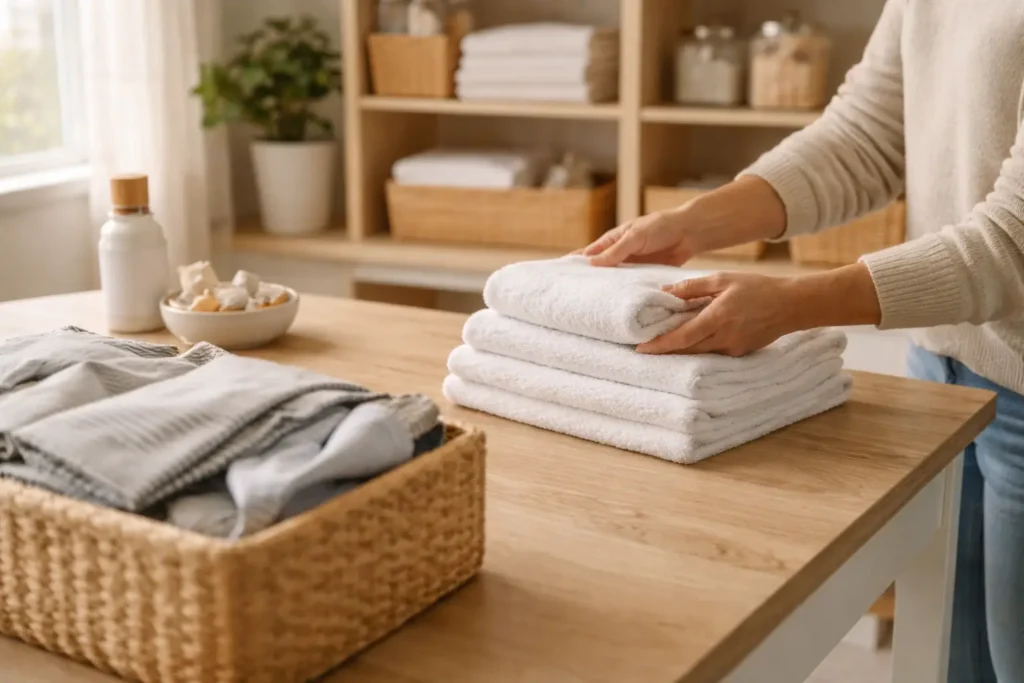
3. Do Small Loads of Laundry Frequently
Laundry becomes stressful when it builds up. Many households experience this pattern explained in why laundry piles up so fast, where small daily clothing cycles gradually turn into overwhelming loads.
Doing smaller loads regularly keeps everything manageable and prevents overwhelming laundry days.
4. Keep Cleaning Supplies Within Reach
When cleaning tools are easy to access, tasks feel easier to start.
Keep basic supplies in key areas like the kitchen and bathroom to encourage quick, consistent cleaning.
5. Make the Bed Every Morning
This simple habit creates an instant sense of order and sets a productive tone for the day.
Even if nothing else gets done, the room already feels more organized.
6. Follow the One-Minute Rule
If a task takes less than a minute, do it immediately.
- Hang a jacket
- Throw away trash
- Put items back
These small actions prevent clutter from forming in the first place.
7. Handle Paper and Mail Immediately
Paper clutter builds quickly if ignored.
Sort, discard, or store items as soon as they arrive to avoid accumulation on surfaces.
8. Do a Quick Evening Reset
Spending 5–10 minutes resetting key areas at the end of the day makes a big difference.
Focus on:
- Kitchen counters
- Living room
- Entryway
This helps you start the next day in a calm, organized environment.
9. Assign a Place for Everything
When items do not have a designated place, they tend to create clutter.
Giving everything a clear home makes it easier to maintain order without extra effort.
10. Reduce What You Own
The fewer items you have, the less there is to clean, organize, and manage.
Regularly reviewing your belongings helps keep your home easier to maintain over time.
How to Apply These Habits in Daily Life
Trying to adopt all habits at once can feel overwhelming. The key is to start small and build gradually.
Start With One or Two Habits
Choose the easiest habits first. Once they become automatic, add new ones.
Attach Habits to Existing Routines
Link habits to actions you already do.
- Reset the living room after dinner
- Wipe the sink after brushing your teeth
This makes them easier to remember and maintain, especially when combined with habits that prevent household clutter.
Keep Tasks Short and Realistic
The goal is consistency, not perfection.
Small, repeatable actions are far more effective than occasional large efforts.
Focus on Maintenance, Not Perfection
An organized home is not about everything being perfect—it is about keeping things under control so they never become overwhelming.
Use Visual Cues as Triggers
A small mess can act as a reminder to take action.
When everything has a place, it becomes easier to notice and fix disorder quickly.
Conclusion
Housework becomes easier not because there is less to do, but because it is approached differently. Small, consistent actions prevent tasks from becoming overwhelming and reduce the effort required to maintain your home.
By adopting habits that make housework easier, you create a system where your home stays organized with less time, less stress, and less energy.
Over time, these habits become automatic, turning housework into something that feels natural rather than exhausting.