The habit that prevents clutter is surprisingly simple, yet it has a powerful effect on how organized a home feels. Clutter rarely appears suddenly. In most homes, it builds gradually through small daily actions that seem harmless at the moment. A jacket placed on a chair, a package left on the counter, or a stack of papers temporarily set aside can slowly transform an organized space into a cluttered one.
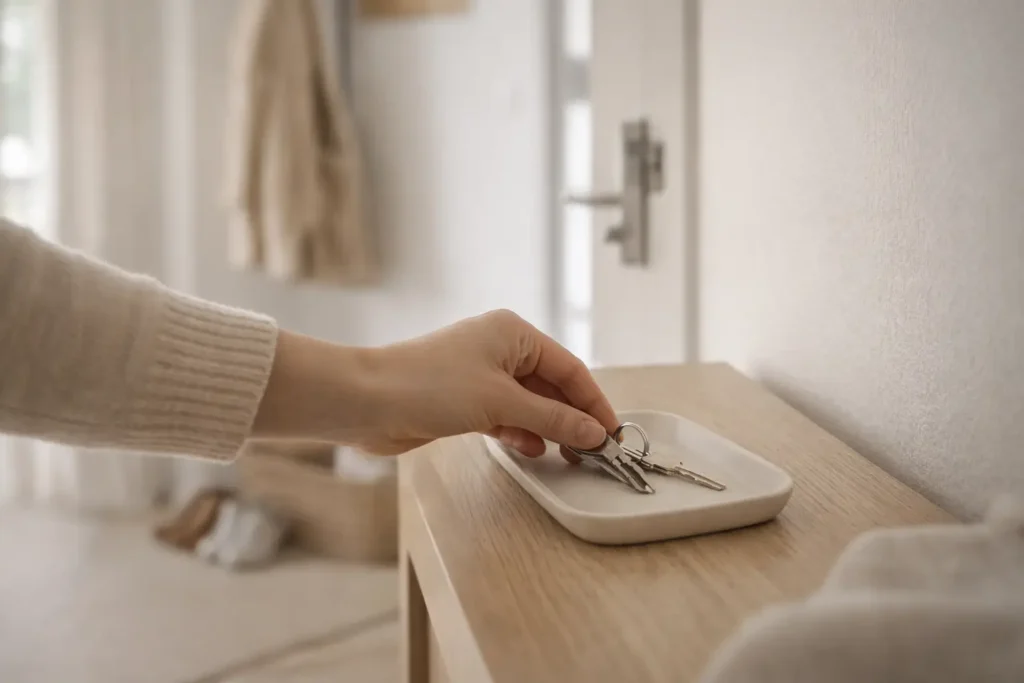
What many people do not realize is that preventing clutter does not require constant cleaning or complicated organization systems. In reality, a single consistent behavior can dramatically reduce household mess. The habit that prevents clutter is the simple practice of returning items to their designated place immediately after use.
This habit may appear small, but its impact is powerful. When objects consistently return to their intended location, clutter has far fewer opportunities to accumulate. Instead of requiring large cleaning sessions, the home remains naturally organized through daily maintenance.
Understanding why clutter forms in the first place helps explain why this habit is so effective.
Why Clutter Happens in Most Homes
Clutter is rarely the result of laziness or poor intentions. More often, it develops because everyday routines create small moments of friction that encourage temporary storage instead of proper organization.
Small daily routines play a major role in whether clutter accumulates or disappears quickly. Many organized homes rely on simple morning routines that reset key areas before the day becomes busy. You can see practical examples of these routines in morning habits for home organization.
When people are busy or distracted, they often place items down “just for now.” Over time, these temporary placements become permanent.
Several factors contribute to this pattern.
Delayed decision-making
One of the most common causes of clutter is postponing small decisions. Items that require attention—such as mail, clothing, or miscellaneous objects—are often placed aside with the intention of addressing them later.
Without a system for resolving these items quickly, they accumulate in visible areas.
Lack of designated storage
Clutter often appears when objects do not have a clear home. When people are unsure where something belongs, they are more likely to leave it on a surface or nearby furniture.
Clear storage locations reduce hesitation and make it easier to maintain order.
Interruptions in daily routines
Modern households are filled with interruptions. Work schedules, family responsibilities, and constant activity make it easy to abandon small tasks halfway through.
When routines are interrupted, items remain where they were last used.
Surface convenience
Flat surfaces such as kitchen counters, tables, and desks naturally attract objects. These spaces become temporary storage areas simply because they are easily accessible.
Once a few items accumulate, additional clutter tends to follow.
Understanding these patterns reveals why clutter often returns even after a thorough cleaning session.
The Habit That Prevents Clutter
The habit that prevents clutter is surprisingly simple: return every item to its designated place immediately after using it.
This behavior eliminates the temporary stage where clutter usually begins. Instead of placing an item down “for later,” it goes directly back to where it belongs.
Although this habit seems obvious, its effectiveness comes from consistency.
When applied consistently, it prevents clutter in several ways:
It removes the temporary stage
Most clutter starts as a temporary placement. By skipping this step entirely, objects never accumulate in the wrong place.
It maintains visual order
When items return to storage immediately, surfaces remain clear. This creates a calmer environment and reduces visual noise throughout the home.
It reduces future workload
Each object returned to its place is one less item that needs to be addressed later. Over time, this significantly reduces the need for large cleaning sessions.
It strengthens organization systems
Consistently using storage locations reinforces the organization system already in place. Items become easier to find and return.
This habit works best when storage systems are simple and accessible.
Practical Ways to Build the Habit That Prevents Clutter
Developing the habit that prevents clutter does not require strict discipline. Instead, it involves small adjustments to everyday routines that make returning items easier than leaving them out.
Several practical strategies help reinforce this behavior.
Another helpful strategy is ending the day with a short reset that restores order in frequently used areas of the home. Even a few minutes spent returning objects to storage can prevent clutter from building up overnight. A simple example of this approach is described in this nightly home reset routine.
Make storage locations obvious
When items have clearly defined places, returning them becomes intuitive.
For example:
- Hooks near the entryway for bags or jackets
- Small trays for keys and daily items
- Dedicated drawers for frequently used objects
The easier it is to identify where something belongs, the more likely it will be returned.
Reduce the distance to storage
People are less likely to return items when storage is inconvenient.
Keeping storage close to where items are used encourages immediate organization.
Examples include:
- Laundry baskets in bedrooms
- Storage bins near play areas
- Kitchen utensil drawers close to preparation areas
Reducing friction increases consistency.
Use micro-resets throughout the day
Small resets help reinforce the habit of returning items.
These resets might occur:
- After finishing a meal
- Before leaving a room
- At the end of a work session
Spending even a minute restoring order keeps clutter from accumulating.
Focus on frequently used objects
Not every item needs constant attention. Prioritizing objects that are used daily makes the habit easier to maintain.
Examples include:
- keys
- bags
- kitchen tools
- clothing
- paperwork
Managing these high-use items prevents the majority of household clutter.
Simple Tips for Maintaining an Organized Home
Once the habit that prevents clutter becomes part of everyday behavior, maintaining an organized home becomes significantly easier.
Daily habits become even more effective when they are supported by larger reset routines that happen throughout the year. Periodic reviews help prevent storage areas from slowly filling with unused items. A helpful structure for this is explained in this seasonal home reset checklist.
These additional tips support the habit and strengthen overall organization.
Keep surfaces intentionally clear
Designating surfaces as clutter-free zones encourages consistent organization.
When surfaces remain mostly empty, any misplaced item becomes immediately noticeable.
Limit unnecessary possessions
The fewer items a home contains, the easier it is to return them to storage.
Regularly reviewing belongings helps prevent storage systems from becoming overcrowded.
Create daily reset moments
Short resets at predictable times help maintain order.
Examples include:
- clearing the kitchen after dinner
- tidying the living room before bed
- resetting workspaces at the end of the day
These moments reinforce the habit of returning items to their place.
Maintain flexible systems
Organization systems should evolve as routines change. If an item consistently ends up in the wrong place, the storage location may need adjustment.
Flexible systems are easier to maintain long term.
Conclusion
Household clutter rarely appears because of a single major event. Instead, it develops through small daily decisions that gradually disrupt the organization of a home.
Fortunately, preventing clutter does not require complex systems or time-consuming cleaning routines. The habit that prevents clutter—returning items to their designated place immediately after use—addresses the problem at its source.
By removing the temporary stage where objects accumulate, this simple habit keeps surfaces clear, reduces daily mess, and supports long-term organization.
Over time, the effect becomes noticeable. Instead of regularly battling clutter, the home maintains its order naturally through consistent everyday behavior.