A simple home organization system is not about achieving perfection. It is about creating a structure that supports how your home is used every day.
Many homes feel disorganized not because of a lack of effort, but because there is no clear system guiding how spaces should function. Items move between rooms, surfaces become temporary storage, and small tasks are constantly postponed.
Over time, this creates a cycle where cleaning becomes necessary again and again, especially when you understand why your house gets messy so fast.
A simple home organization system breaks this cycle by replacing effort with structure. Instead of constantly fixing disorder, it prevents disorder from building in the first place.
This type of structure is easier to apply when you understand how all elements of your home connect. A broader framework for this can be seen in the Household Systems Blueprint, which explains how to build a complete and sustainable system across your home.
Simple Home Organization System: How It Works
A simple home organization system works by reducing friction and distributing effort across small, repeatable actions.
Rather than relying on large organizing sessions, it creates a steady flow of maintenance. Items are returned to their place naturally, and tasks are completed before they accumulate.
This system is built on three core principles:
- Clarity — every item has a defined place
- Accessibility — storage is easy to use
- Consistency — small actions are repeated daily
When these principles are applied, the home becomes easier to manage without requiring constant attention, especially when combined with approaches like a functional home organization method.
Why Homes Become Disorganized Without a System
Disorganization is rarely caused by a single event. It is usually the result of repeated small actions that go unnoticed.
Without a system, organization depends on memory and motivation. Both are unreliable over time.
Some of the most common causes include:
Lack of Defined Storage
When items do not have a clear place, they tend to move between surfaces.
This creates visual clutter and makes it harder to maintain order.
Task Accumulation
Small tasks are often ignored because they seem insignificant.
However, repeated over time, they create larger problems that require more effort to resolve.
Overloaded Surfaces
Counters, tables, and chairs often become temporary storage zones.
Without a system to reset them, they remain cluttered.
Irregular Cleaning Patterns
Cleaning is often done in large, infrequent sessions.
This creates cycles of disorder followed by effort, instead of maintaining stability.
How to Build a Simple Home Organization System Step by Step
Creating a simple home organization system does not require a complete reset of your home. It can be built gradually, starting with small changes.
Step 1 — Define Functional Zones
Divide your home into clear zones based on how each space is used:
- entryway for items that come in and out
- kitchen surfaces for preparation and daily use
- living room for shared activities
- bedroom for rest and personal storage
Each zone should have a clear purpose.
Step 2 — Assign a Place for Every Frequently Used Item
Focus on items you use daily.
Ask:
- Where is this item used most often?
- Is it easy to return after use?
Avoid complex storage solutions. Simplicity improves consistency.
Step 3 — Reduce Friction in Daily Actions
If something is difficult to store, it will not be stored consistently.
Simplify by:
- using open containers
- avoiding overfilled drawers
- placing items within easy reach
The easier the system, the more effective it becomes.
Step 4 — Introduce Micro Habits
Small actions prevent accumulation.
Examples:
- putting items back immediately
- clearing one surface at a time
- handling small tasks without delay
These habits take little time but create long-term stability.
These micro actions become more effective when structured into daily routines such as daily habits that keep your home organized.
Step 5 — Create a Daily Reset Routine
At the end of the day, take a few minutes to:
- clear visible surfaces
- return misplaced items
- prepare key areas for the next day
This prevents clutter from carrying over.
A structured version of this approach can be seen in a daily home reset checklist, which helps restore order consistently at the end of each day.
Step 6 — Add a Weekly Adjustment Layer
Once a week, review your spaces:
- reorganize areas that feel overloaded
- remove items that are no longer needed
- adjust storage if something is not working
This keeps the system flexible and aligned with your routine.
Many households apply this step through a weekly home organization checklist, which helps maintain structure before clutter spreads across multiple areas.
Rooms That Benefit Most From a Simple Home Organization System
While the system can be applied everywhere, some areas show immediate improvement.
Kitchen
Frequent use makes it prone to accumulation.
Keeping tools accessible and surfaces clear reduces effort.
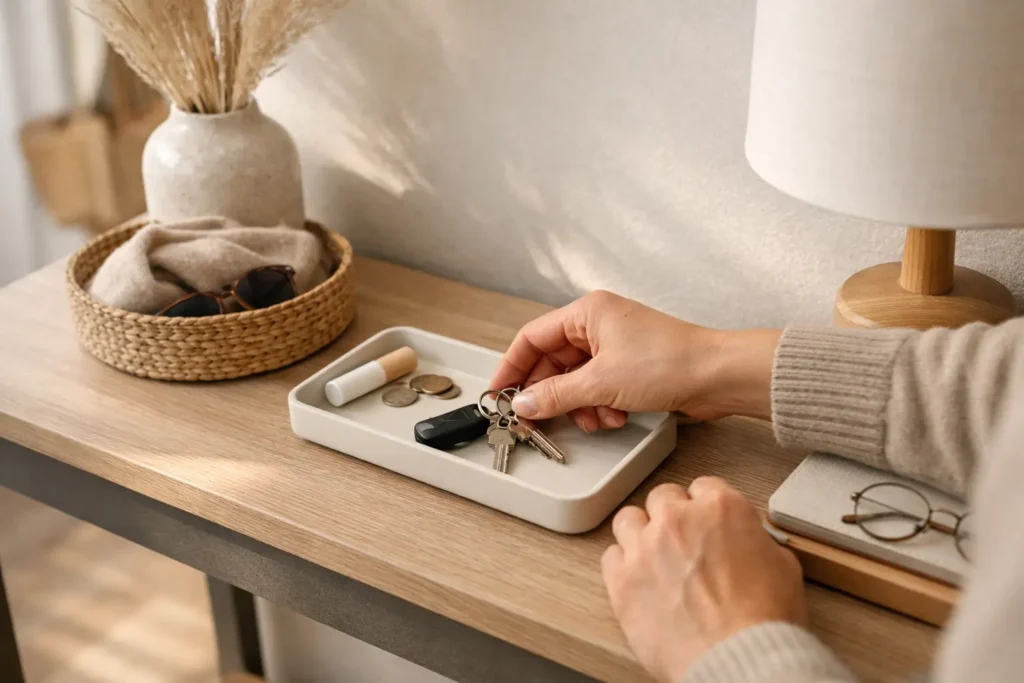
Entryway
This is where clutter often begins.
Defining storage for shoes, bags, and keys prevents it from spreading.
Living Room
Shared spaces collect items from different parts of the home.
Daily resets are especially effective here.
Bedroom
Clothing and personal items require consistent handling.
Simple systems prevent buildup.
Bathroom
Small items and daily use make organization essential.
Keeping only necessary items visible helps maintain clarity.
Tips for Maintaining a Simple Home Organization System
Even the simplest system requires consistency.
Keep It Simple
Avoid overcomplicating storage.
If a system is difficult to use, it will not be maintained.
Reduce Decision-Making
Make it obvious where items belong.
The fewer decisions required, the easier it is to stay organized.
Focus on High-Impact Areas
Not all spaces require the same level of attention.
Prioritize areas that are used daily.
Be Flexible
Adjust your system as your routine changes.
Small improvements are more effective than complete resets.
Common Mistakes That Break an Organization System
Even a well-designed system can fail if certain patterns are ignored.
Overcomplicating Storage
Detailed systems may look efficient but are difficult to maintain.
Simple solutions are more sustainable.
Relying on Motivation Instead of Structure
Motivation changes daily.
A system should work even when energy is low.
Ignoring High-Traffic Areas
Some zones naturally accumulate more items.
These areas need stronger, simpler systems.
Not Updating the System
A system that worked before may not work forever.
Regular adjustments keep it functional.
How a Simple System Reduces Cleaning Effort
A simple home organization system changes how effort is distributed.
Instead of:
- large cleaning sessions
- repeated clutter cycles
- constant corrections
This approach becomes even more effective when supported by a daily cleaning checklist, which keeps essential tasks under control between resets.
You experience:
- stable order
- smaller daily actions
- reduced overall effort
The home becomes easier to manage because disorder is prevented before it grows, especially when supported by small routines like a 10 minute daily organization habit.
Conclusion
A simple home organization system is not about doing more. It is about doing things differently.
By creating clear spaces, reducing friction, and maintaining small daily actions, organization becomes part of your routine rather than a separate task.
Over time, your home begins to support itself.
And that is what makes organization sustainable, practical, and easy to maintain.