Keeping a home organized is often seen as a constant task that requires time, effort, and discipline. Many people try different strategies, from decluttering sessions to storage solutions, but still struggle to maintain order over time.
The functional home organization method offers a different approach. Instead of focusing only on how things look, it prioritizes how a home works on a daily basis. The goal is to create systems that support real life, making organization easier to maintain without constant effort.
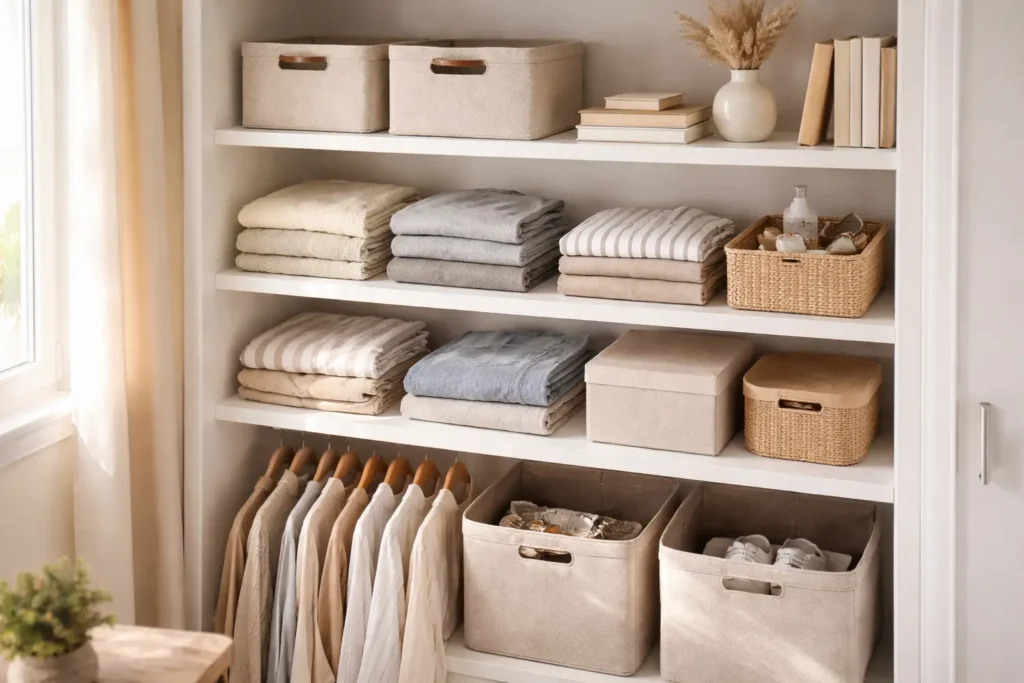
When your home is designed to function well, maintaining order becomes a natural part of your routine rather than a recurring challenge, especially when you understand why your house gets messy so fast.
What Is the Functional Home Organization Method and Why It Works
The functional home organization method is a system that focuses on aligning your home with your daily habits and routines.
Rather than organizing based on appearance, trends, or ideal scenarios, this method is based on:
- how you use your space
- how often you access certain items
- how your daily routines flow
This approach works because most disorganization happens when systems do not match real-life behavior.
For example:
- items stored far from where they are used
- lack of clear storage for everyday objects
- complicated systems that are difficult to maintain
When organization systems are practical and intuitive, they reduce friction. This makes it easier to keep things in order without thinking about it, which directly connects to understanding why clutter keeps coming back.
Step-by-Step: How to Apply the Functional Home Organization Method
Implementing this method does not require a complete overhaul of your home. Instead, it focuses on small, strategic adjustments.
1. Observe how your home is actually used
Start by paying attention to your daily routines:
- where items tend to accumulate
- which spaces feel difficult to maintain
- which tasks are frequently postponed
These patterns reveal where your current systems are not working.
2. Identify friction points
Friction points are areas where maintaining order feels difficult.
Common examples include:
- cluttered entryways
- overloaded kitchen counters
- chairs used to hold clothes
- drawers that are hard to access
These areas signal that the system needs to be simplified.
3. Store items where they are used
One of the core principles of the functional home organization method is proximity.
Keep items close to where they are used:
- keys near the entrance
- cleaning supplies in each main area
- frequently used kitchen tools within easy reach
This reduces effort and increases consistency.
4. Simplify storage systems
Complex systems are difficult to maintain.
Instead:
- use open containers or simple bins
- avoid over-organizing small items
- limit the number of steps required to put something away
The easier it is to store something, the more likely it will be returned to its place.
5. Create “default zones” for everyday items
Every frequently used item should have a clear, designated place.
Examples:
- a tray for keys and small items
- a basket for daily-use objects
- a specific spot for bags or shoes
When everything has a home, decision-making becomes easier.
6. Test and adjust your system
No system is perfect from the start.
Observe how your new setup works:
- does it feel easier to maintain?
- are items returning to their place naturally?
- are certain areas still becoming cluttered?
Adjust as needed until the system feels intuitive.
Rooms That Benefit Most From the Functional Home Organization Method
While this method can be applied to the entire home, some areas benefit more immediately.
Entryway
This is one of the highest-traffic areas.
Focus on:
- easy storage for shoes
- hooks for bags or coats
- a tray for keys
A functional entryway prevents clutter from spreading.
Kitchen
The kitchen is used constantly, making functionality essential.
Prioritize:
- accessible storage for daily-use items
- clear counters
- simple systems for utensils and tools
A well-organized kitchen reduces daily effort.
Living Room
This space often accumulates miscellaneous items.
Improve functionality by:
- using baskets for quick storage
- limiting decorative clutter
- creating clear surfaces
Small adjustments here can significantly improve the overall feel of the home.
Bedroom
A functional bedroom supports rest and routine.
Focus on:
- easy storage for clothing
- clear bedside surfaces
- simple organization systems
This helps maintain a calm and uncluttered environment.
How to Maintain the Functional Home Organization Method Over Time
Creating a functional system is only the first step. Maintaining it requires consistency and simplicity.
Keep systems easy to follow
If a system feels complicated, it will not last.
Choose solutions that:
- require minimal effort
- are easy to understand
- fit naturally into your routine
Avoid over-organization
Too many categories or containers can make a system harder to use.
Keep it simple:
- group similar items together
- avoid unnecessary divisions
- prioritize accessibility
Reset small areas daily
A quick daily reset helps maintain order without requiring large efforts.
Focus on:
- returning items to their place
- clearing surfaces
- maintaining key areas
This approach becomes even more effective when supported by simple routines like a 10 minute daily organization habit.
Adjust systems as your life changes
Your routines evolve over time, and your organization should adapt accordingly.
Revisit your systems when:
- your schedule changes
- new items are introduced
- certain areas become difficult to maintain
Flexibility is essential for long-term success, especially when supported by a long-term home maintenance system that keeps your home organized without constant effort.
Why Functional Organization Is More Sustainable Than Traditional Methods
Traditional organization often focuses on:
- aesthetics
- perfection
- one-time results
While these can look appealing, they are often difficult to maintain.
The functional home organization method is different because it prioritizes sustainability.
It works with your habits rather than against them.
This results in:
- less clutter
- less effort
- more consistency
Over time, your home becomes easier to manage because the systems support your daily life.
Combining Functional Organization With Simple Daily Habits
For best results, this method should be combined with small daily habits.
These habits reinforce your systems by:
- maintaining order
- preventing buildup
- supporting consistency
Examples include:
- quick daily resets
- putting items away immediately
- maintaining high-traffic areas
Together, systems and habits create a home that stays organized with minimal effort, especially when combined with structured routines like a weekly home reset routine.
Conclusion
The idea that organization requires constant work is often misleading.
With the functional home organization method, the focus shifts from effort to efficiency. By creating systems that align with your daily routines, maintaining order becomes simpler and more natural.
Instead of constantly fixing clutter, you create an environment where clutter is less likely to appear in the first place.
And that is what makes organization truly sustainable.