A 15 minute home reset is one of the simplest ways to maintain an organized home without spending hours cleaning or decluttering. Instead of waiting until mess builds up across multiple rooms, this short routine restores balance to the space before small disruptions turn into larger problems.
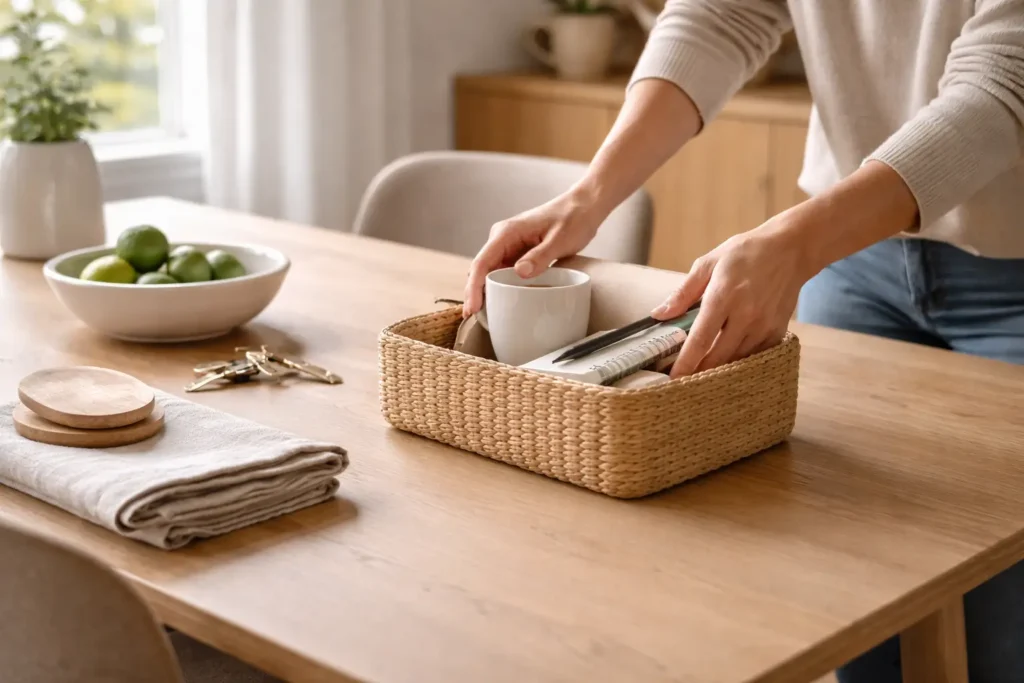
Many homes become disorganized not because people avoid cleaning, but because everyday activities gradually move objects out of place. Bags are left in entryways, dishes remain on counters, and small items slowly accumulate on surfaces.
A short reset routine creates a moment to restore order.
When practiced regularly, a 15 minute reset can prevent clutter from spreading and keep living spaces functional with very little effort.
What Is a 15 Minute Home Reset and Why It Works
A 15 minute home reset is a short organization routine designed to quickly restore order in commonly used areas of the home.
Many homes also benefit from starting the day with a quick organization routine. Small resets performed in the morning can prevent clutter from spreading throughout the house. A simple example is a morning home reset routine, which helps restore order before the day becomes busy.
Unlike deep cleaning or large decluttering projects, a reset focuses on small adjustments that bring spaces back to their intended structure.
The goal is not perfection.
Instead, the reset simply restores balance by:
- clearing surfaces
- returning misplaced items
- restoring functional spaces
This routine works because clutter rarely appears all at once. Instead, it accumulates gradually through small daily disruptions.
When a short reset is performed consistently, these disruptions are corrected before they become overwhelming.
Another reason the reset works is psychological.
Short tasks feel easier to begin and complete. A fifteen-minute routine is manageable, which makes it more likely to become a consistent habit.
Over time, these small resets maintain the organization systems already present in the home.
Step-by-Step 15 Minute Home Reset Routine
The routine can be completed in about fifteen minutes and usually focuses on the most frequently used spaces.
The goal is to move quickly and avoid overthinking each task.
A simple structure might look like this:
Short reset routines are often most effective when they are performed consistently each day. Some households combine this approach with a simple checklist that keeps organization tasks easy to follow. A practical example is a daily home reset checklist that helps maintain order across the home.
Minute 1–3: Clear Visible Surfaces
Start by clearing the most visible surfaces in the home.
These often include:
- kitchen counters
- coffee tables
- entryway consoles
- desks
Remove items that do not belong and return them to their appropriate places.
Clearing surfaces immediately improves the appearance of a room.
Minute 4–7: Return Items to Their Proper Rooms
Next, walk through the home with the goal of returning misplaced items to their correct rooms.
During daily life, objects often migrate between spaces. For example:
- dishes may appear in the living room
- clothing may remain outside closets
- books or chargers may move between rooms
Taking a few minutes to restore these items helps maintain spatial organization.
Minute 8–10: Restore Functional Areas
Focus on areas that support daily routines.
This may include:
- straightening cushions on the sofa
- folding a blanket
- organizing entryway items
- adjusting chairs around a table
These small adjustments restore functionality to shared spaces.
Minute 11–13: Quick Kitchen Reset
The kitchen often benefits from a short reset.
A quick check may include:
- placing dishes in the dishwasher
- wiping counters
- organizing frequently used items
Because the kitchen is used repeatedly throughout the day, restoring order here has a large impact on the entire home.
Minute 14–15: Final Walk-Through
The final step is a short walk-through of the main living areas.
Look for small adjustments that can quickly restore order, such as:
- repositioning objects
- removing stray items
- returning objects to storage
This final step reinforces the overall organization of the space.
Areas of the Home That Benefit Most From a 15 Minute Home Reset
Although the reset can be applied anywhere, some areas tend to benefit the most from this routine.
These are typically spaces that experience constant movement throughout the day.
Common areas include:
Entryways
Entry spaces collect daily items such as:
- keys
- bags
- shoes
A short reset helps keep this area functional.
Living Rooms
Shared spaces often accumulate objects throughout the day.
A quick reset restores visual calm by organizing small items and adjusting furniture.
Kitchens
Because the kitchen is used repeatedly, even small adjustments can significantly improve its functionality.
A quick reset maintains surfaces and prevents clutter from spreading.
Work or Study Areas
Desks and work surfaces can accumulate papers, devices, and miscellaneous items.
A short reset helps maintain focus and productivity.
Tips for Maintaining a Consistent 15 Minute Home Reset
The effectiveness of a 15 minute home reset depends on consistency rather than intensity.
Many households find that quick resets are easier to maintain when they become part of an evening routine. Performing a short reset before the day ends helps restore balance and prepare the home for the next morning. A simple example is a nightly home reset routine, which complements shorter resets during the day.
A few simple strategies make the routine easier to maintain.
Choose a Consistent Moment
Many households attach the reset to a specific moment in the day.
Examples include:
- after dinner
- before bedtime
- early evening
Choosing a predictable moment helps transform the reset into a habit.
Focus on Progress, Not Perfection
The goal is not to make the home perfectly clean.
The reset simply restores structure.
Even small improvements help prevent clutter from spreading.
Set a Timer
Using a timer reinforces the idea that the reset is a short routine.
Knowing that the task lasts only fifteen minutes makes it easier to begin.
Involve Other Household Members
In shared households, small tasks can be divided among multiple people.
When everyone contributes, the reset becomes even faster.
Combining the 15 Minute Home Reset With Other Routines
The 15 minute home reset works best when combined with other small organization routines.
Weekly organization habits can also reinforce the benefits of daily resets. When small routines are combined with weekly maintenance, homes tend to remain organized for longer periods of time. Practical examples of these systems can be found in weekly habits for home organization, which help maintain structure throughout the week.
For example:
Daily habits maintain order throughout the day.
Weekly organization routines help maintain storage systems.
Monthly resets address deeper adjustments.
Together, these layers create a stable structure that keeps the home organized without requiring large cleaning sessions.
Instead of reacting to clutter, the home is maintained through consistent small actions.
Conclusion
Maintaining an organized home does not require long cleaning sessions or large decluttering projects.
Often, small routines practiced consistently have the greatest impact.
A 15 minute home reset provides a simple way to restore order, prevent clutter from spreading, and maintain functional living spaces.
Because the routine is short and manageable, it can easily become part of daily life.
Over time, this small habit creates a calm and organized environment that requires far less effort to maintain.